Dog stairs and dog ramps are designed to help pets reach beds, sofas, vehicles, and other raised areas without having to jump. Both products can make daily movement safer and more comfortable, especially for small dogs, senior dogs, puppies, and pets with limited mobility.
Although dog stairs and ramps serve a similar purpose, they work differently. Dog stairs require the dog to step upward, while ramps provide a gradual sloping surface. This guide will help you compare dog stairs and dog ramps based on your dog’s size, age, health, confidence, and the area where the product will be used.
Understand Why Your Dog May Need Mobility Support
Repeatedly jumping onto and off furniture can place pressure on a dog’s joints, back, and legs. Mobility products can reduce the height your dog needs to jump and provide a safer way to reach elevated areas.
Dog stairs or ramps may help:
Reduce jumping from high furniture
Make beds and sofas easier to access
Help senior dogs move more comfortably
Support dogs with joint or mobility problems
Protect small dogs from hard landings
Help puppies access raised surfaces safely
Make it easier for dogs to enter vehicles
Reduce the risk of slipping or falling
The best option depends on how comfortably your dog can climb, balance, and walk on an inclined surface.
What Are Dog Stairs?
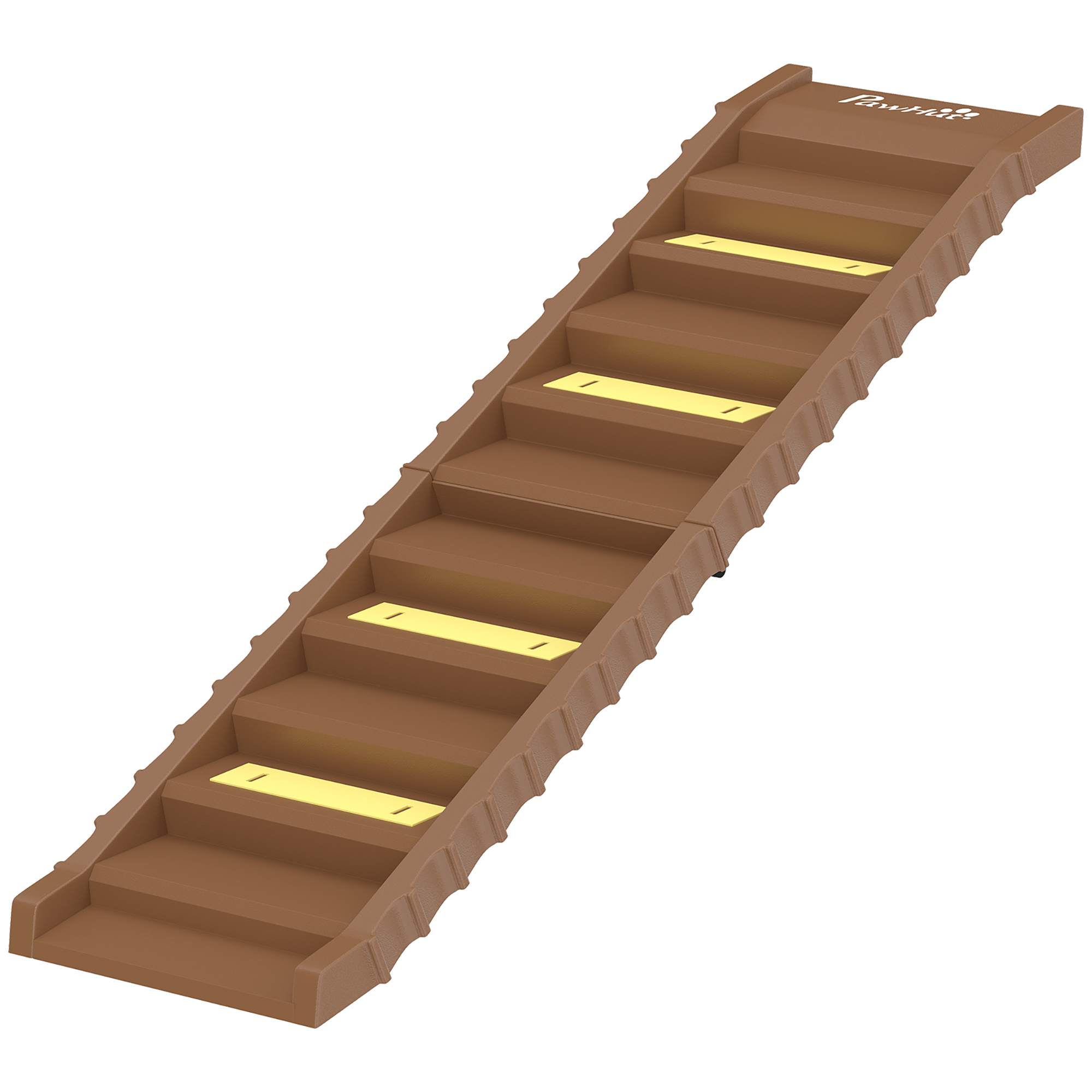
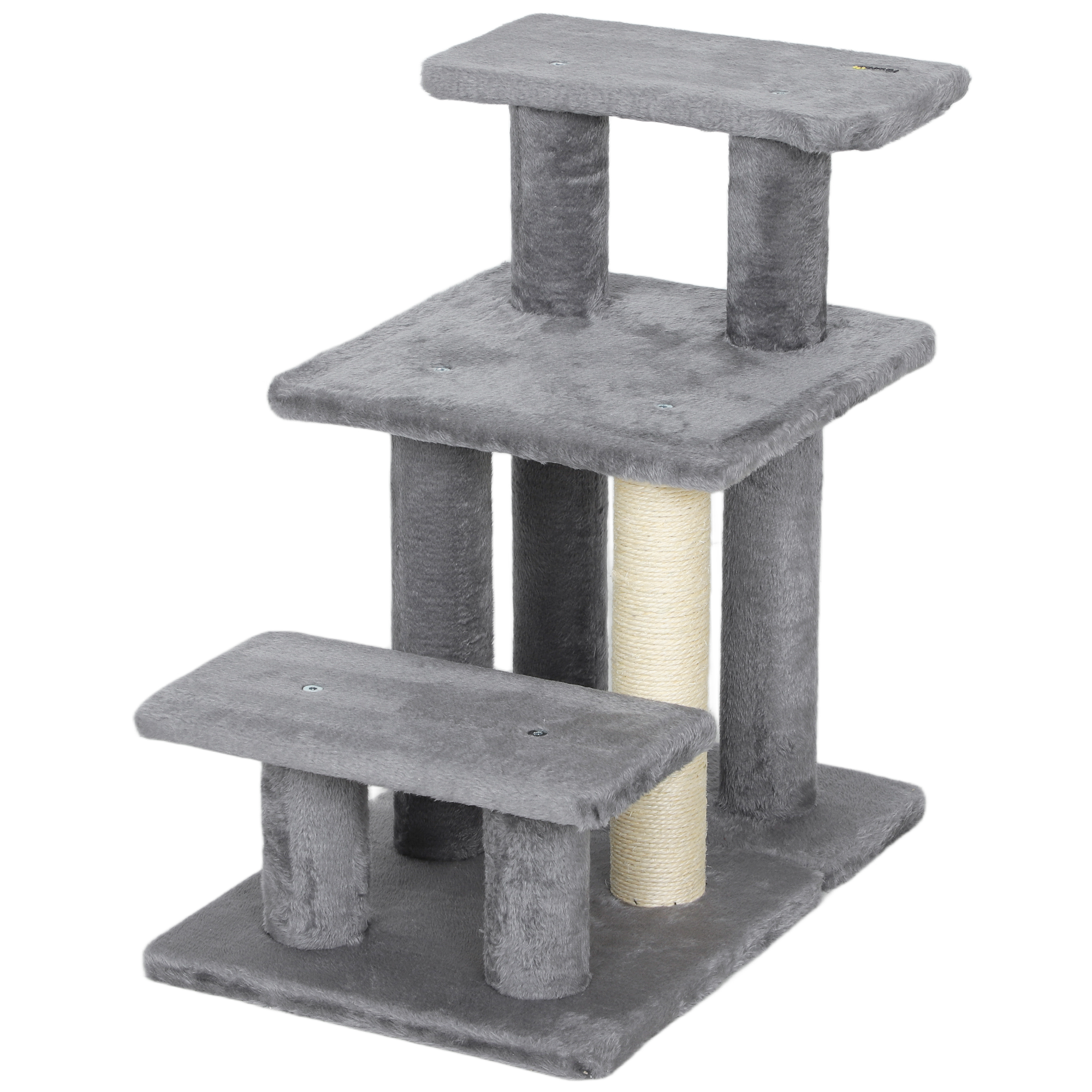
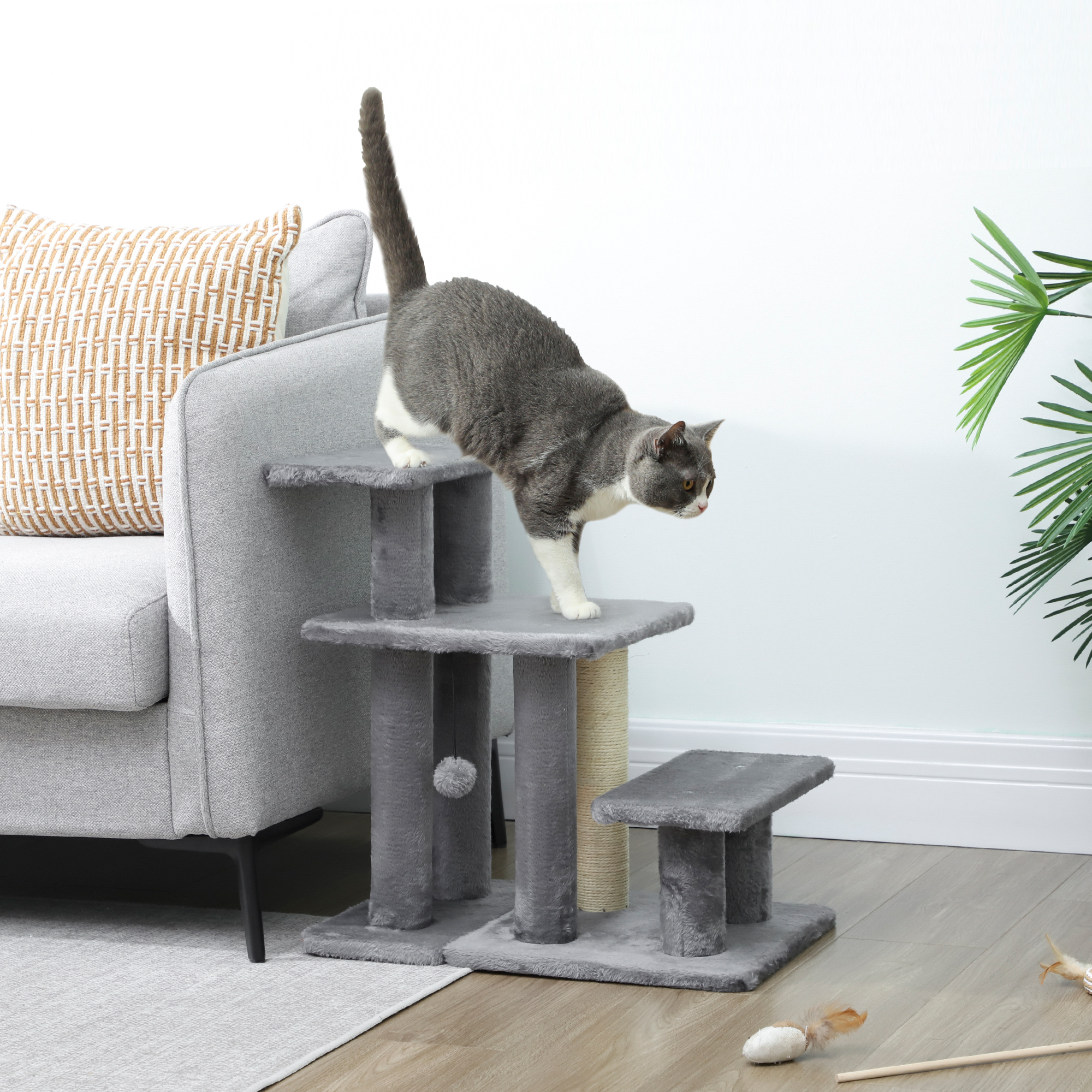
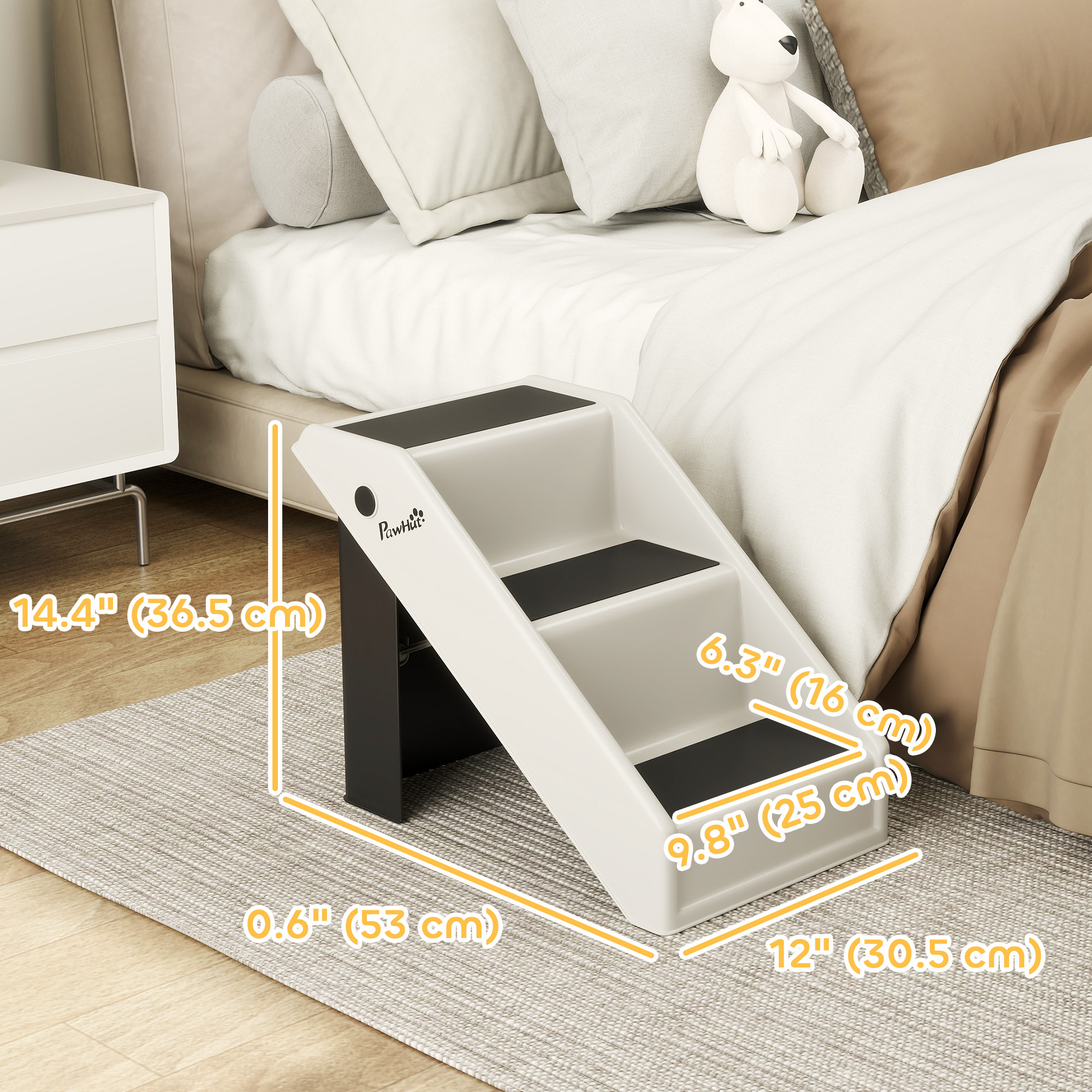
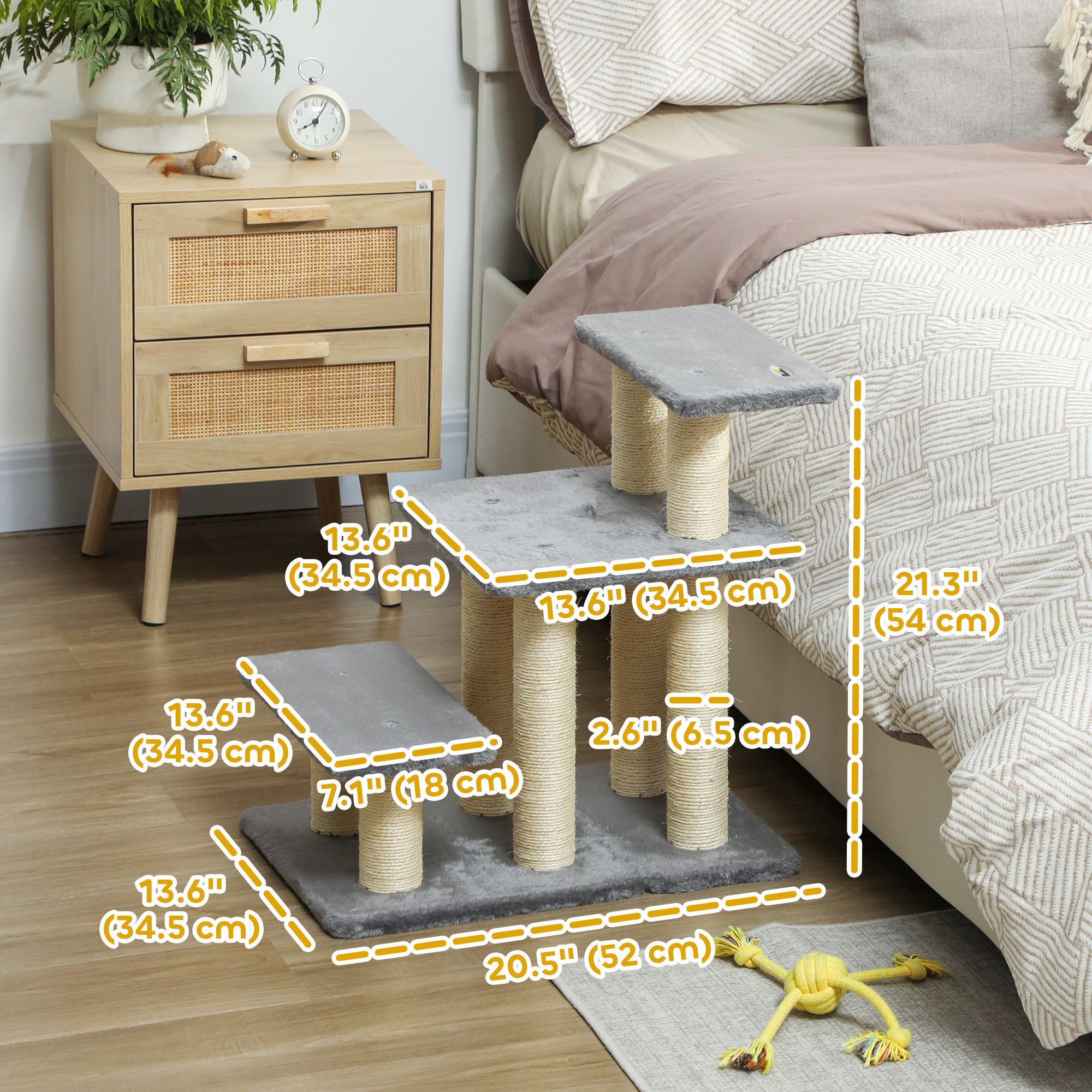
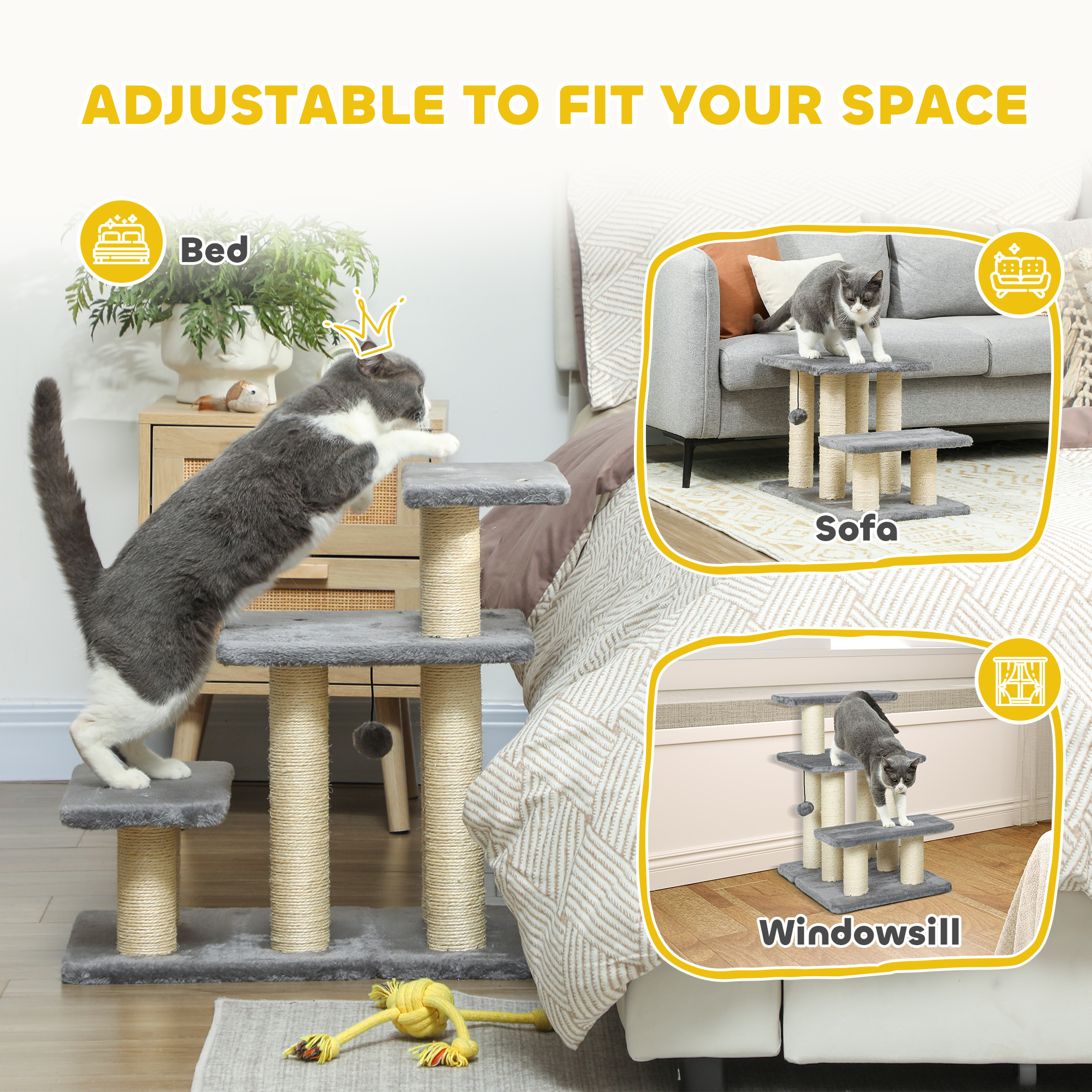
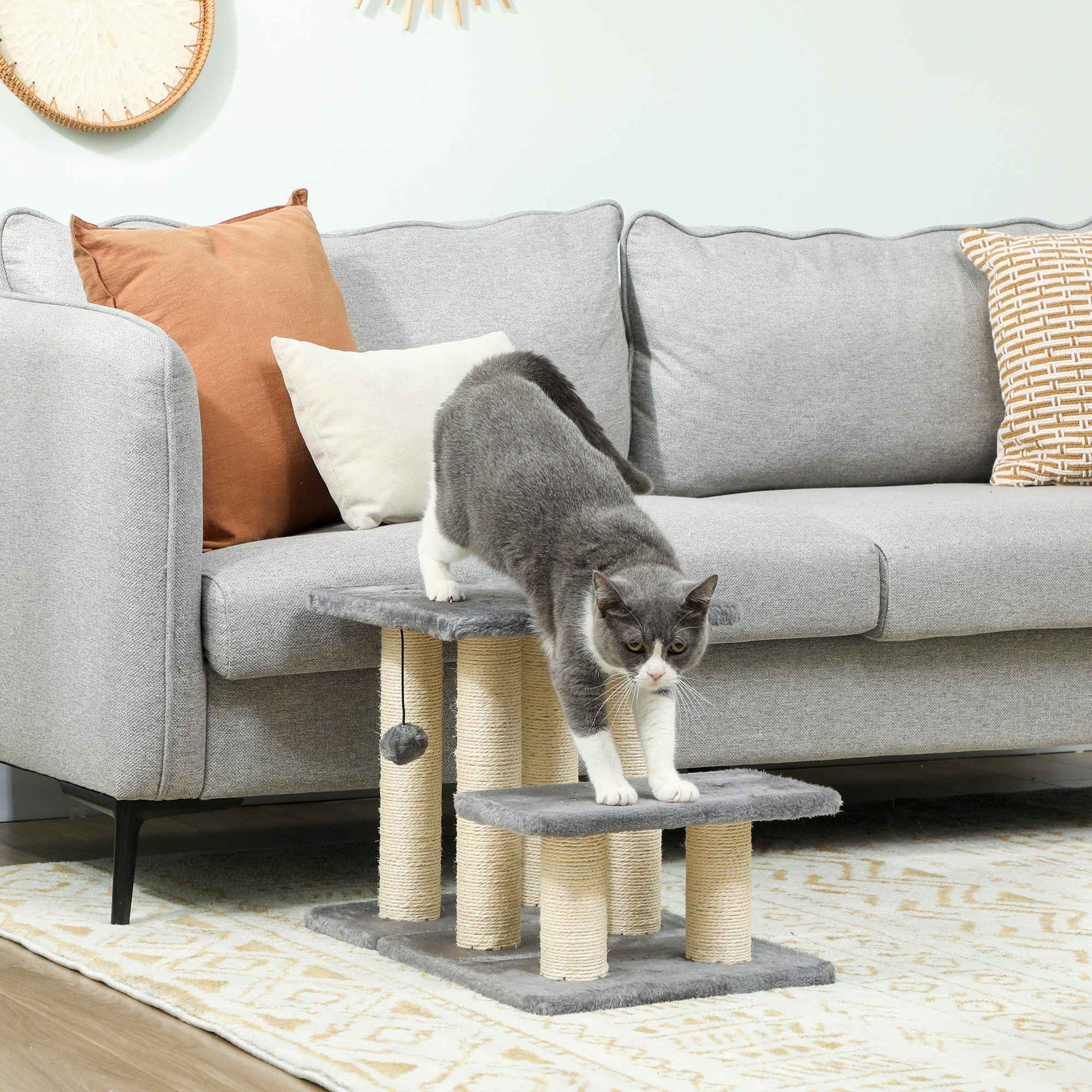
Dog stairs are small portable steps designed specifically for pets. They usually have two to five steps and can be placed beside a bed, sofa, chair, or other raised surface.
Dog stairs are available in different materials, including:
Foam
Wood
Plastic
Metal
Fabric-covered structures
Foldable materials
Some models include removable fabric covers, non-slip surfaces, storage compartments, or foldable frames.
Dog stairs are generally compact and can fit well in bedrooms, living rooms, and smaller spaces.
What Are Dog Ramps?
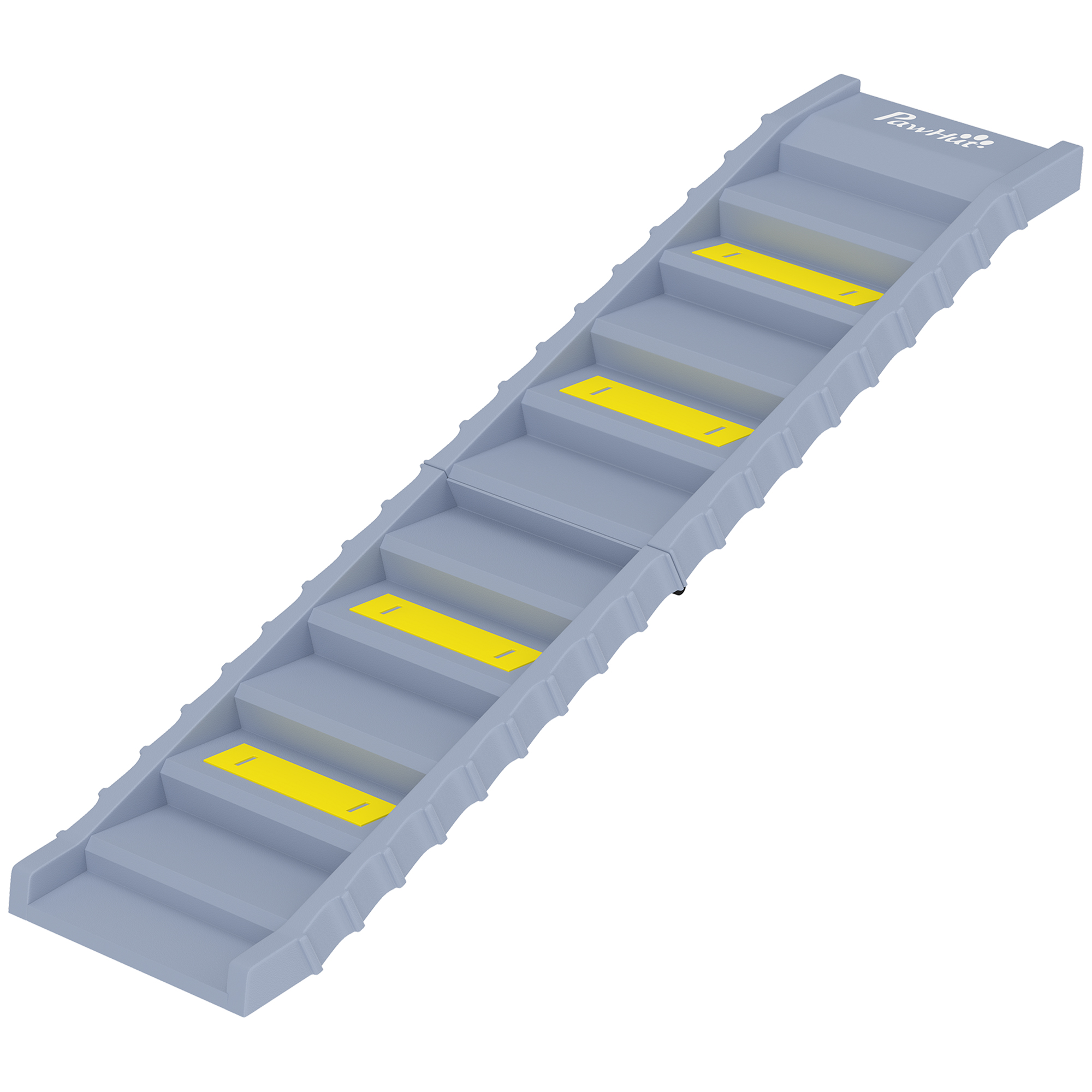
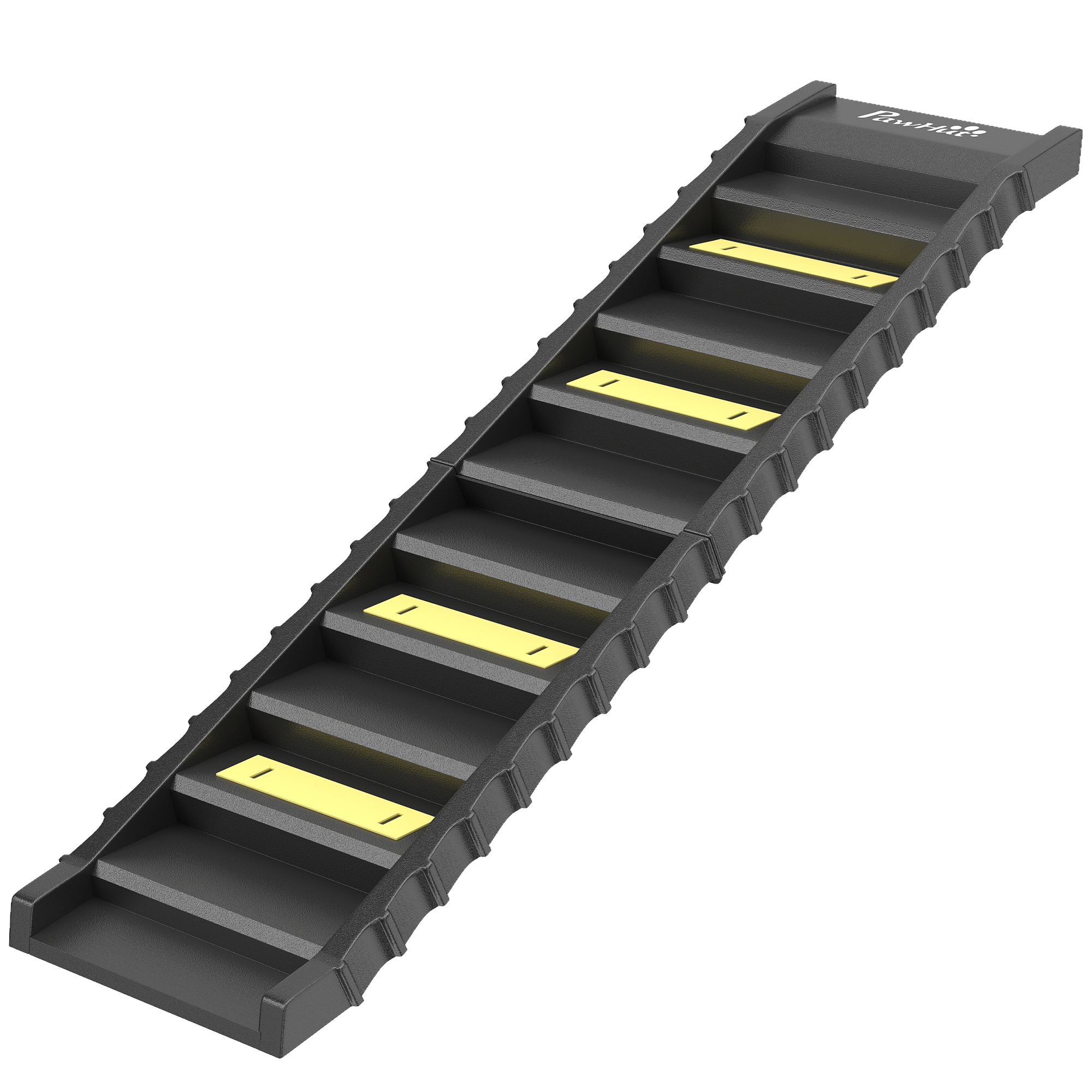
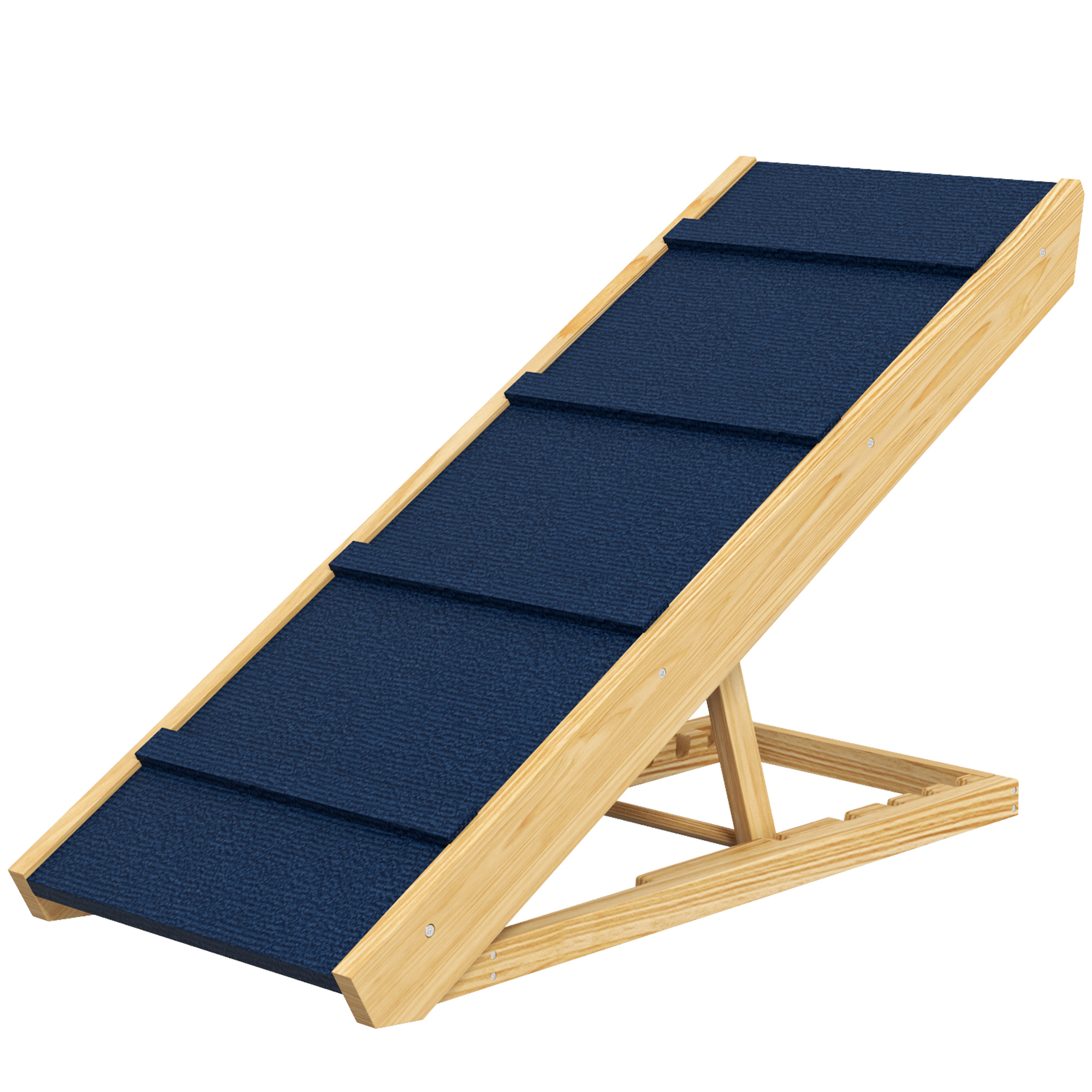
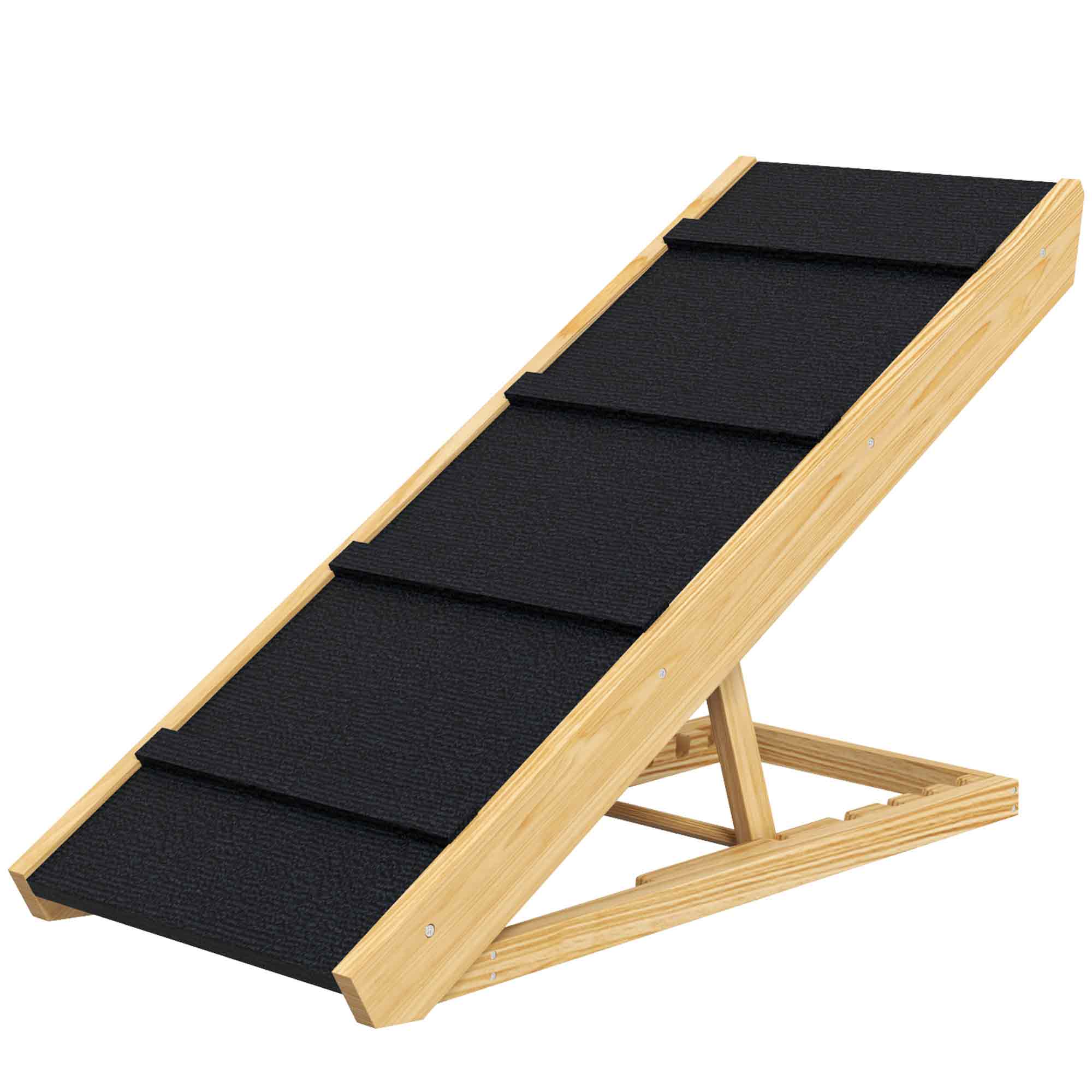
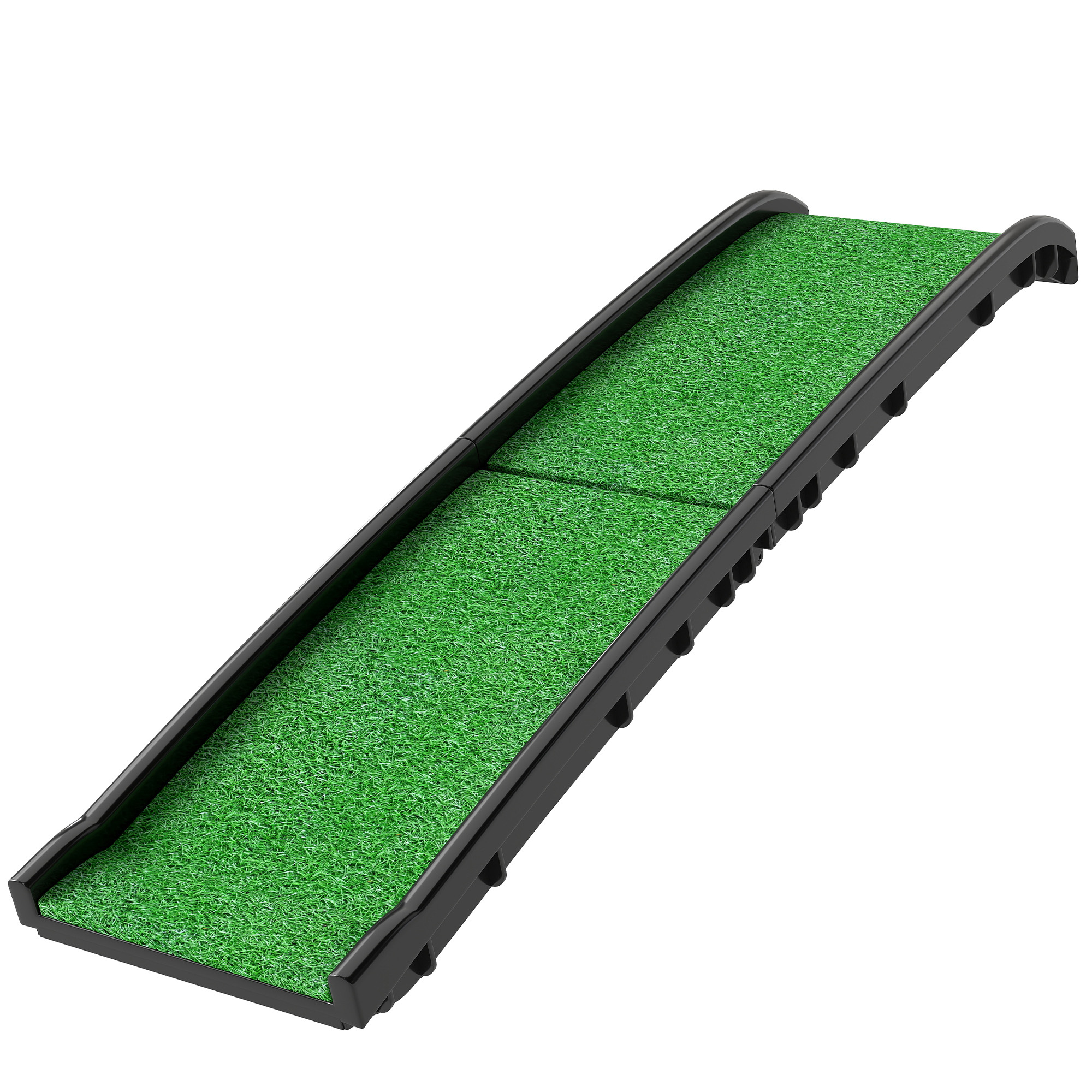
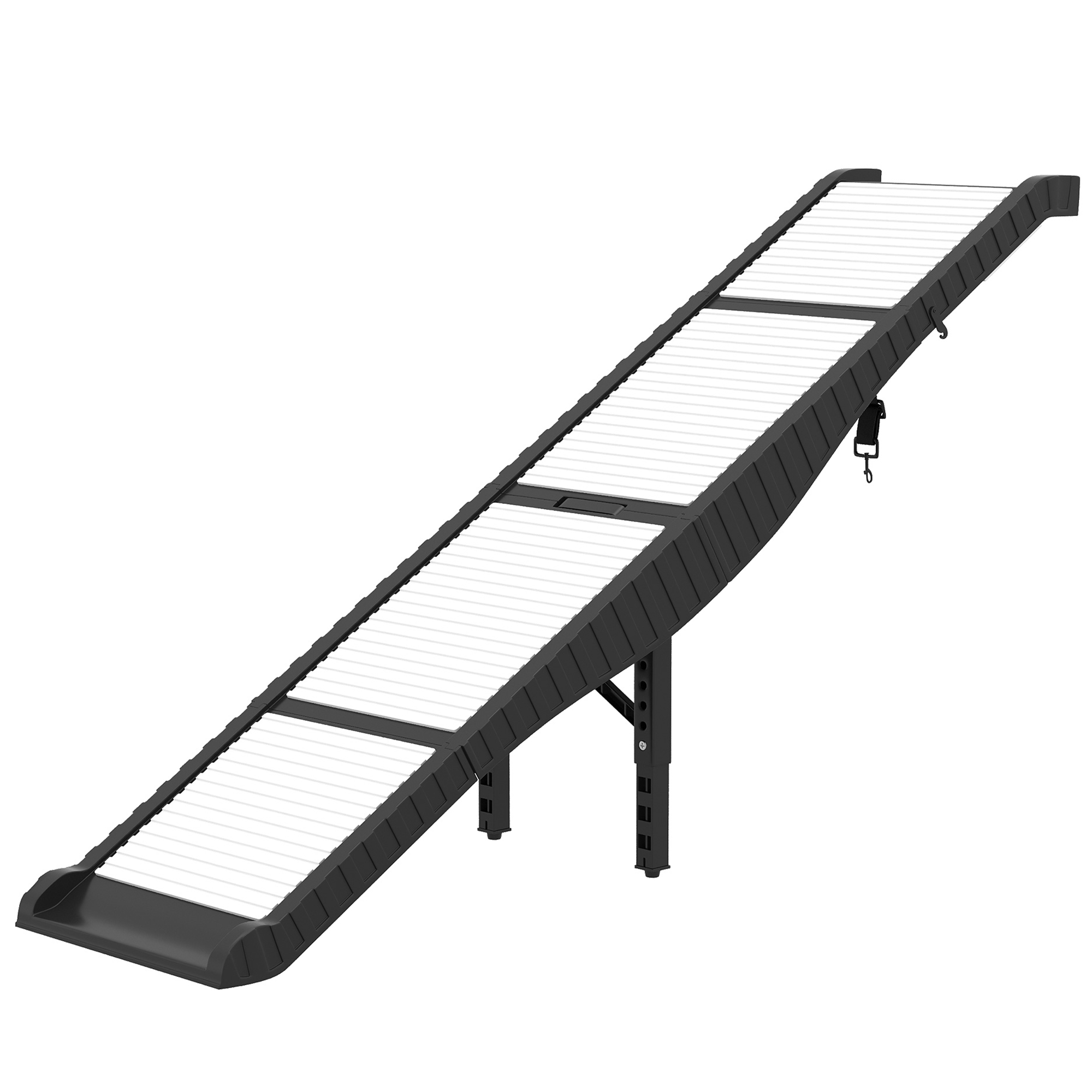
A dog ramp is a flat or slightly textured platform positioned at an angle. Instead of climbing individual steps, the dog walks gradually upward or downward.
Dog ramps may be:
Fixed
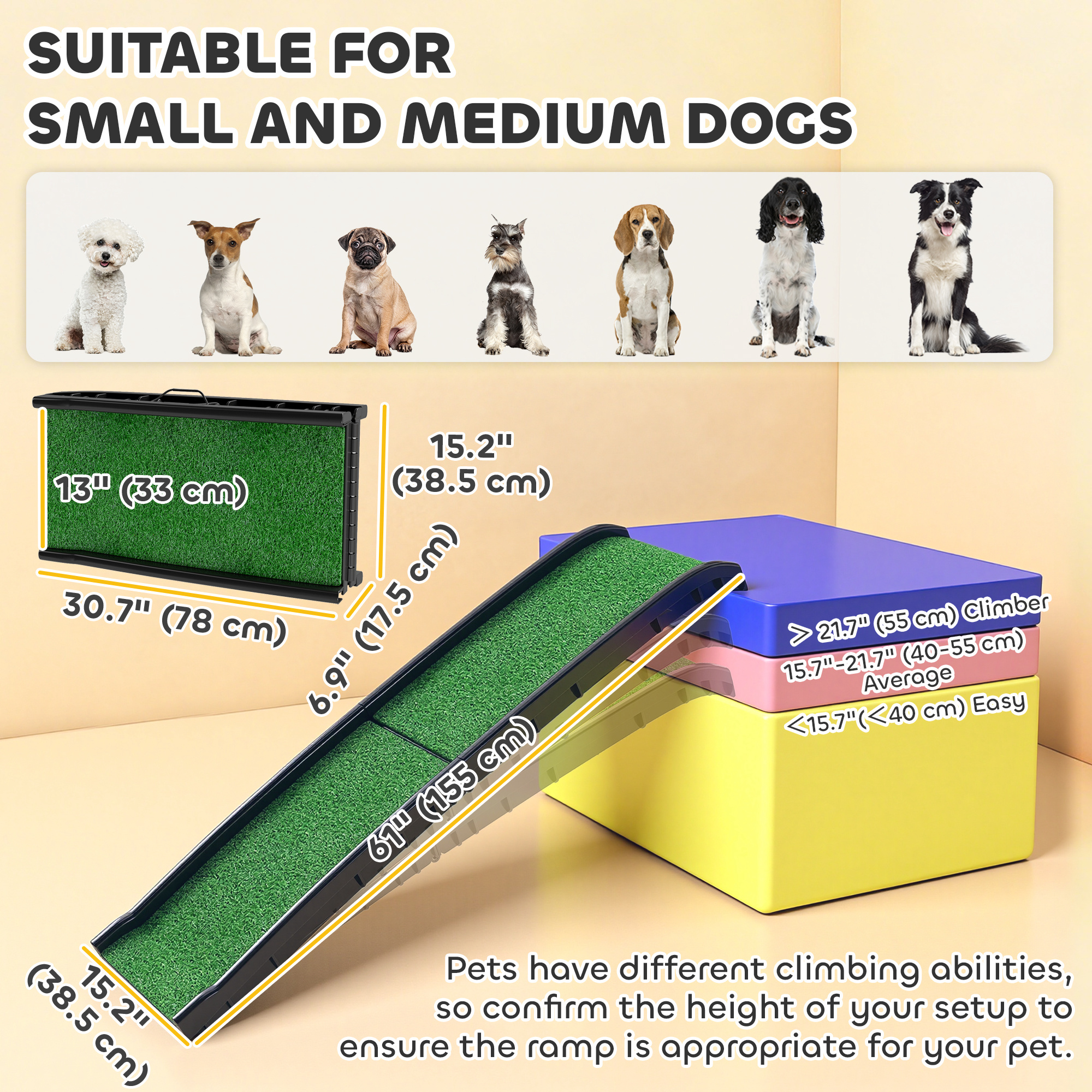
Foldable
Telescopic
Portable
Adjustable in height
Designed for indoor use
Designed for vehicles or outdoor use
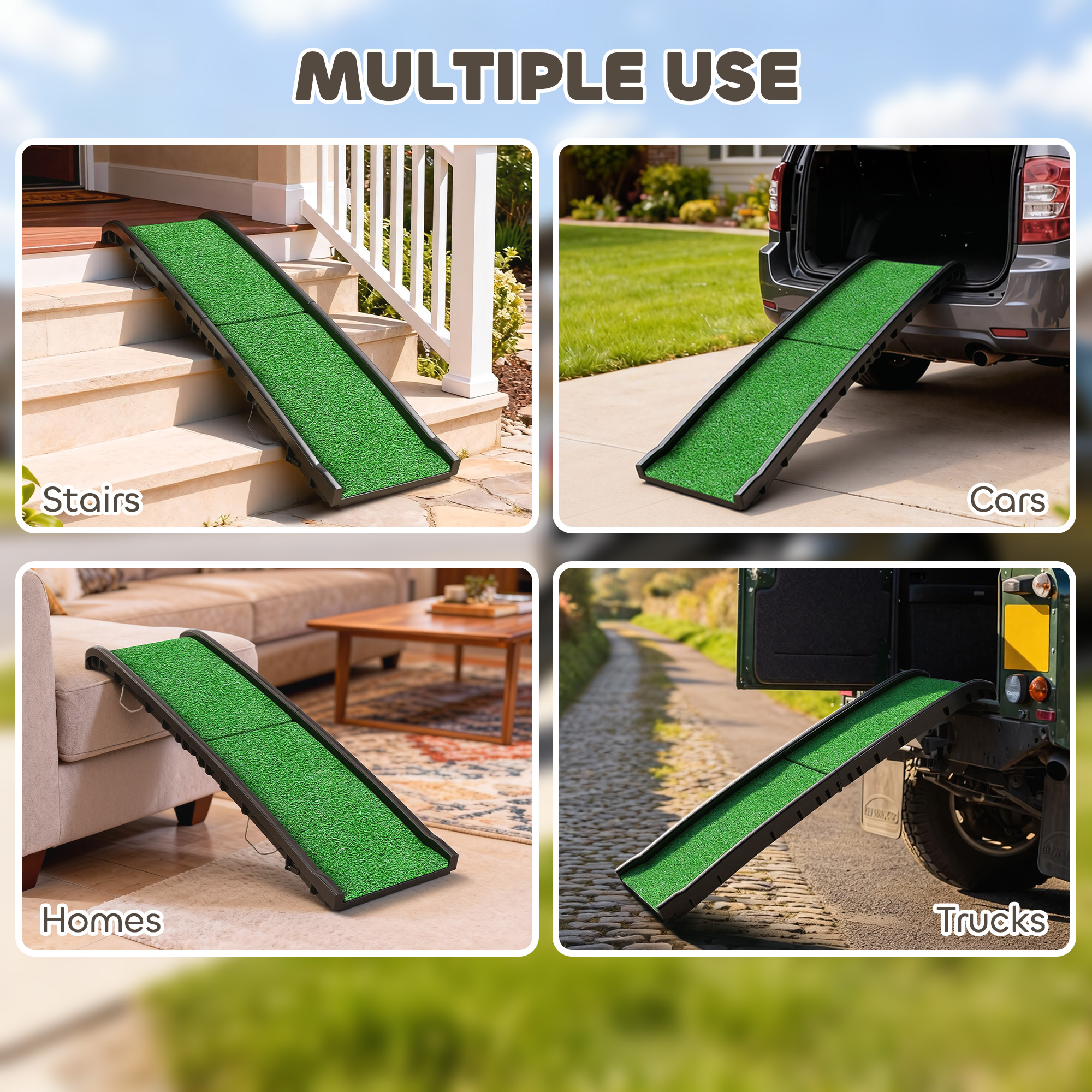
Ramps are commonly used beside beds, sofas, stairs, porches, vehicles, and grooming tables.
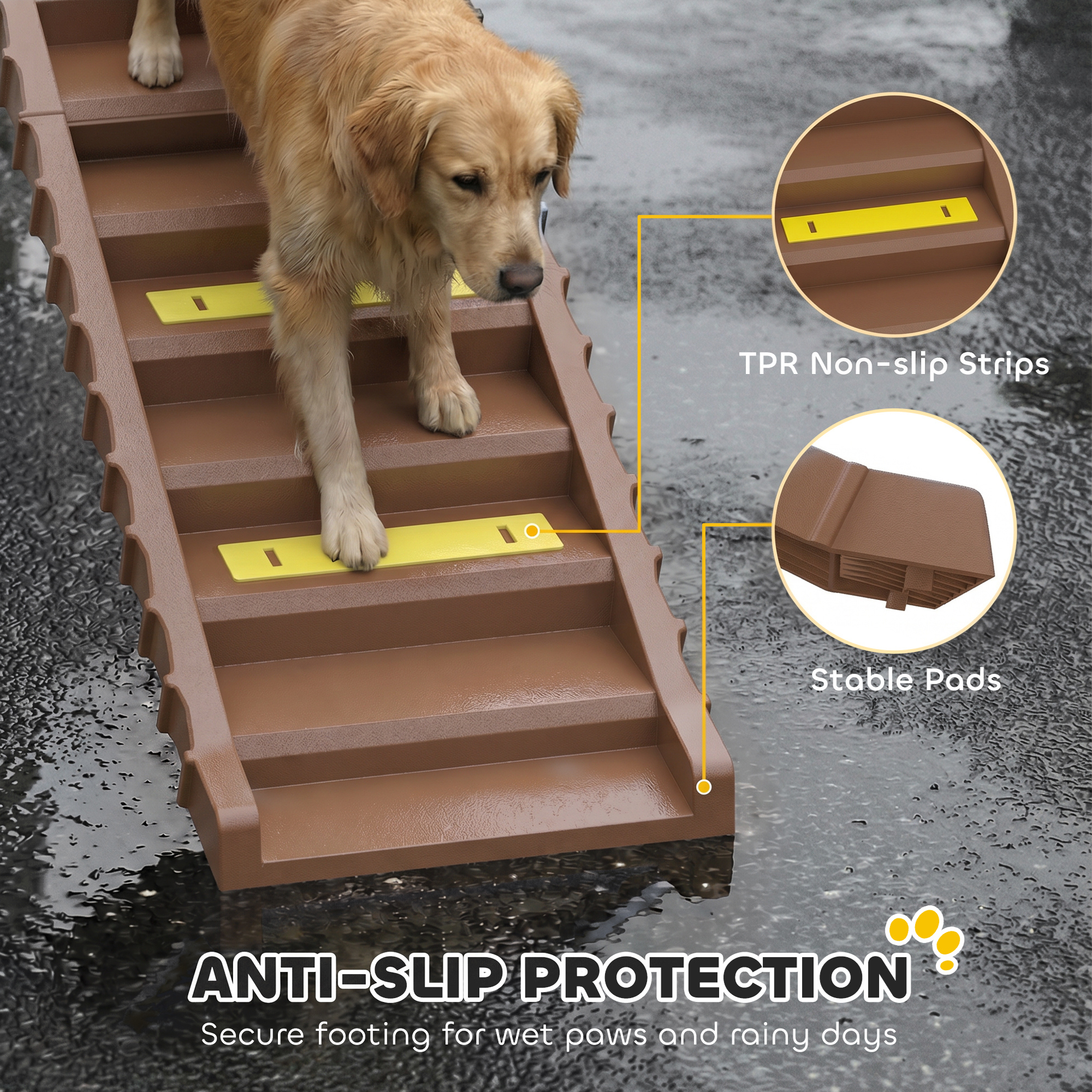
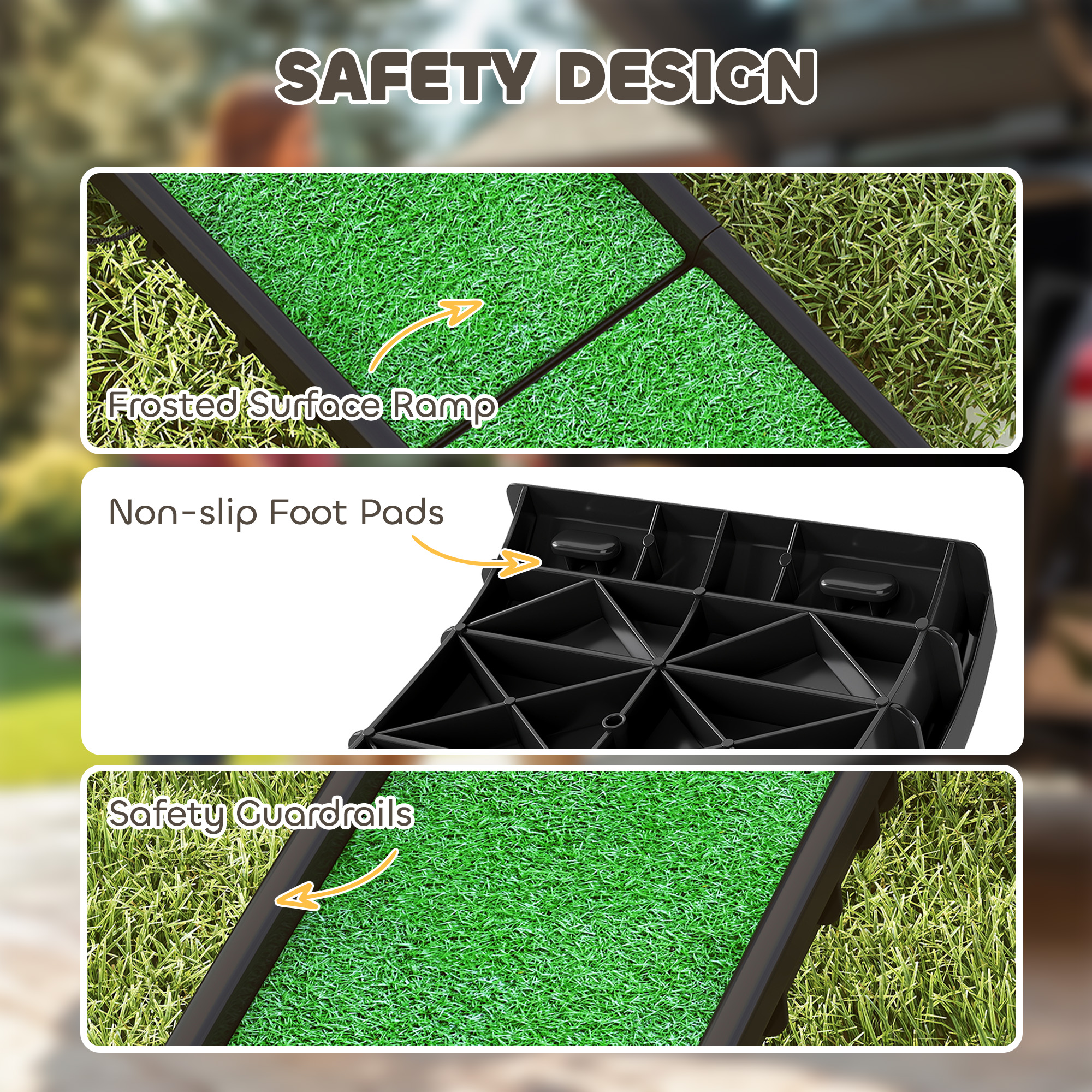
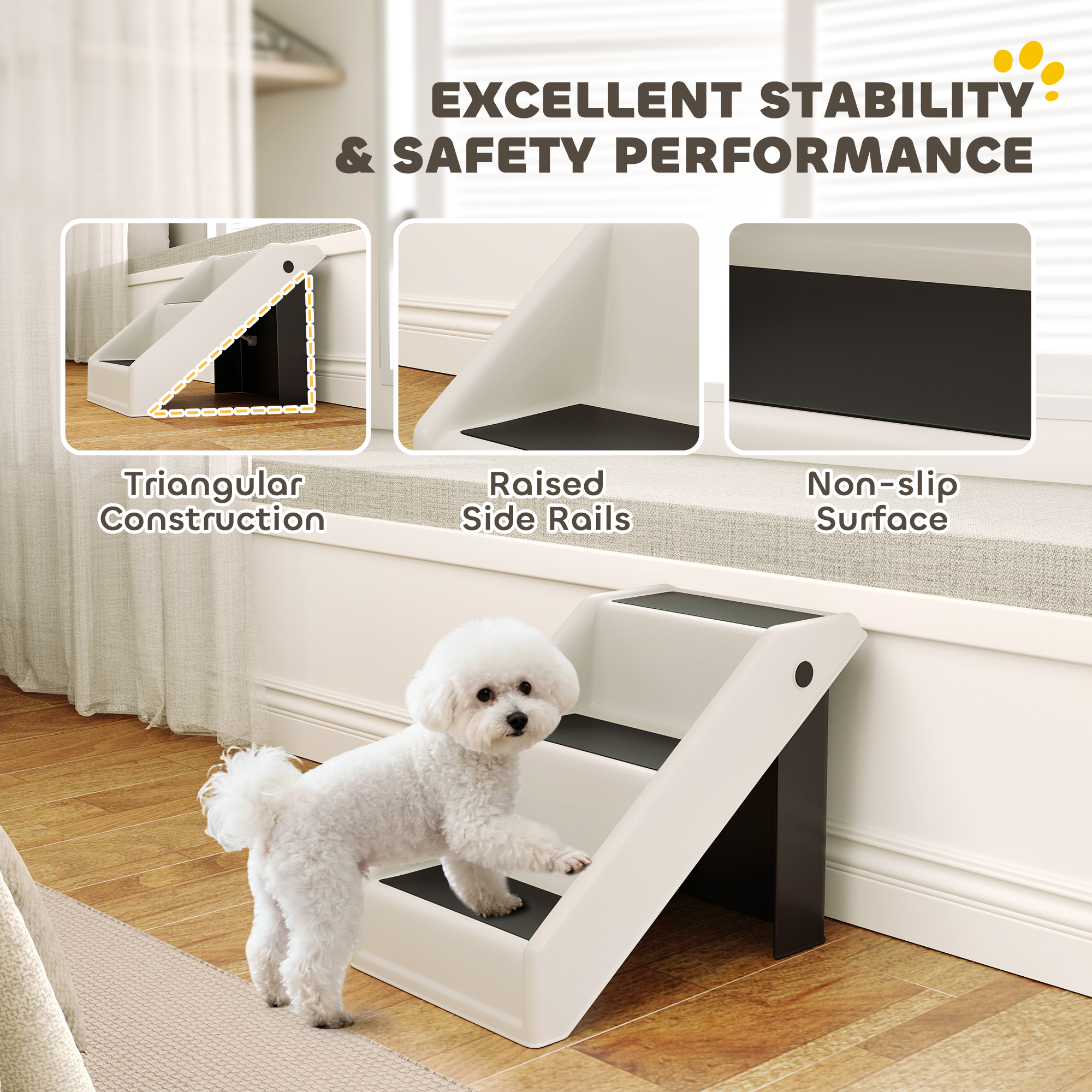
A good ramp should have a secure base and a non-slip walking surface to help prevent movement while the dog is using it.
Dog Stairs vs Dog Ramps: The Main Difference
The main difference is the type of movement required.
Dog stairs require the pet to lift each leg and step upward. This movement is similar to climbing normal household stairs.
Dog ramps allow the pet to walk along a continuous slope. The dog does not need to lift its legs as high, but it must feel comfortable walking on an angled surface.
Dog stairs may be better for dogs that:
Already use household stairs confidently
Have good balance
Can bend their legs comfortably
Need access to a sofa or low bed
Live in a home with limited floor space
Dog ramps may be better for dogs that:
Have difficulty lifting their legs
Have arthritis or joint discomfort
Are recovering from surgery
Have back or spinal concerns
Need help entering a vehicle
Are nervous about climbing steps
Neither option is automatically better for every dog.
Which Is Better for Small Dogs?
Small dogs often have difficulty reaching high beds and sofas because of their shorter legs. Repeated jumping can also lead to uncomfortable landings.
Dog stairs are often suitable for healthy small dogs because:
The steps are designed for shorter legs
They take up less floor space
They are easy to place beside furniture
Many small dogs learn to use them quickly
However, the step height must be appropriate. Steps that are too high or too deep may be difficult for toy and miniature breeds.
A ramp may be better if the small dog:
Has very short legs
Has a long body
Has joint pain
Has a history of back problems
Avoids climbing stairs
Is recovering from an injury
Breeds with long backs and short legs may benefit from avoiding repeated jumping and steep climbing.
Which Is Better for Senior Dogs?
Senior dogs may experience reduced strength, slower movement, stiffness, or difficulty balancing. In many cases, a ramp can be easier because it does not require the dog to lift its legs over individual steps.
A ramp may be a good option for an older dog when:
Its joints appear stiff
It hesitates before climbing stairs
It struggles to lift its back legs
It has difficulty jumping onto furniture
It slips on normal household stairs
It tires easily
However, some senior dogs may feel uncertain on a ramp, especially when the slope is steep or the surface is slippery.
Low, wide dog stairs may still work for senior dogs that are comfortable climbing and have good balance. Observe how your dog normally moves before choosing.
Which Is Better for Dogs with Arthritis?
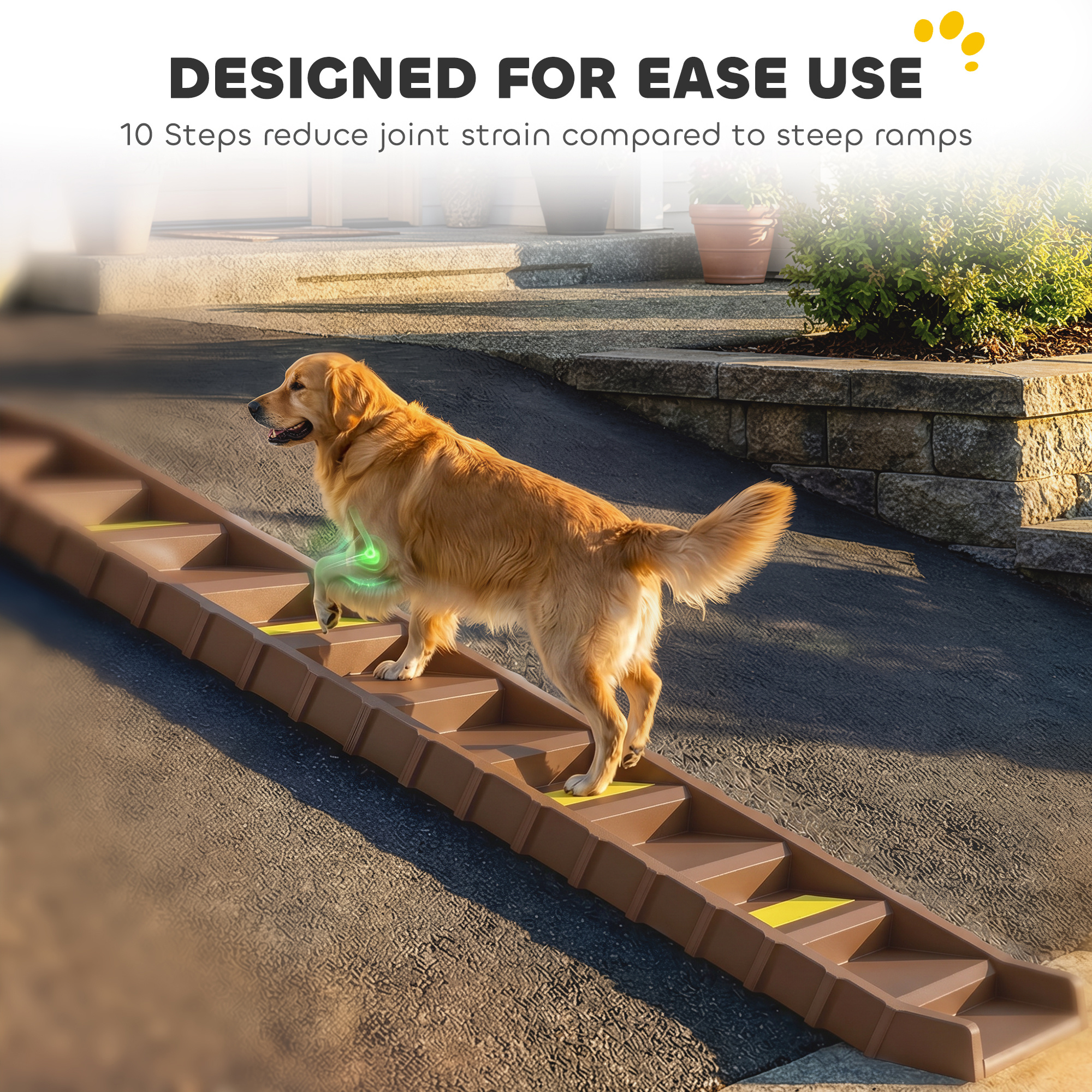
Arthritis can make bending, lifting, and placing weight on the joints uncomfortable. A gently sloped ramp is often easier than stairs because it requires less vertical movement.
When choosing a ramp for a dog with arthritis, look for:
A gentle incline
A wide walking surface
A strong non-slip covering
Stable construction
Raised side edges
A suitable weight capacity
Enough length to avoid a steep angle
A short ramp placed against a high bed may create a steep slope. A longer ramp usually creates a gentler angle, but it also requires more floor space.
Ask a veterinarian for guidance when your dog has diagnosed arthritis or a significant mobility condition.
Which Is Better for Dogs with Back Problems?
Dogs with back or spinal problems may need to avoid repeated jumping and sudden movements. In many situations, a gradual ramp may provide smoother access than stairs.
A ramp may help reduce:
Sudden landings
Repeated jumping
Sharp vertical movement
Pressure caused by climbing high steps
The correct choice depends on the dog’s diagnosis and mobility level. Some dogs may still need assistance or a harness while using the ramp.
Always follow veterinary recommendations after spinal surgery, injury, or diagnosis of a back condition.
Which Is Better for Puppies?
Puppies are still developing their coordination, balance, bones, and joints. A low set of stairs can help a puppy reach a sofa or low bed, but the steps should be wide and stable.
Dog stairs may be suitable when:
The furniture is not very high
The steps are low
The surface provides good grip
The puppy is supervised
The structure does not move
A ramp may be useful for puppies that are too small to climb steps comfortably. However, puppies may initially try to jump from the side, chew the material, or run too quickly.
Supervise the puppy until it understands how to use the product safely.
Which Is Better for Large Dogs?
Large dogs require a strong product with a suitable weight capacity. Many lightweight foam stairs are designed mainly for smaller pets and may compress or become unstable under a heavier dog.
Dog ramps are commonly preferred for large dogs because:
They are available with higher weight limits
They can provide access to vehicles
They can reduce the need for lifting
They may be easier for dogs with joint problems
They are available in wider sizes
If you choose stairs for a large dog, look for a strong frame, wide steps, a non-slip base, and a clearly stated weight capacity.
Never assume that pet stairs are suitable for a large dog without checking the manufacturer’s specifications.
Consider the Height of the Furniture
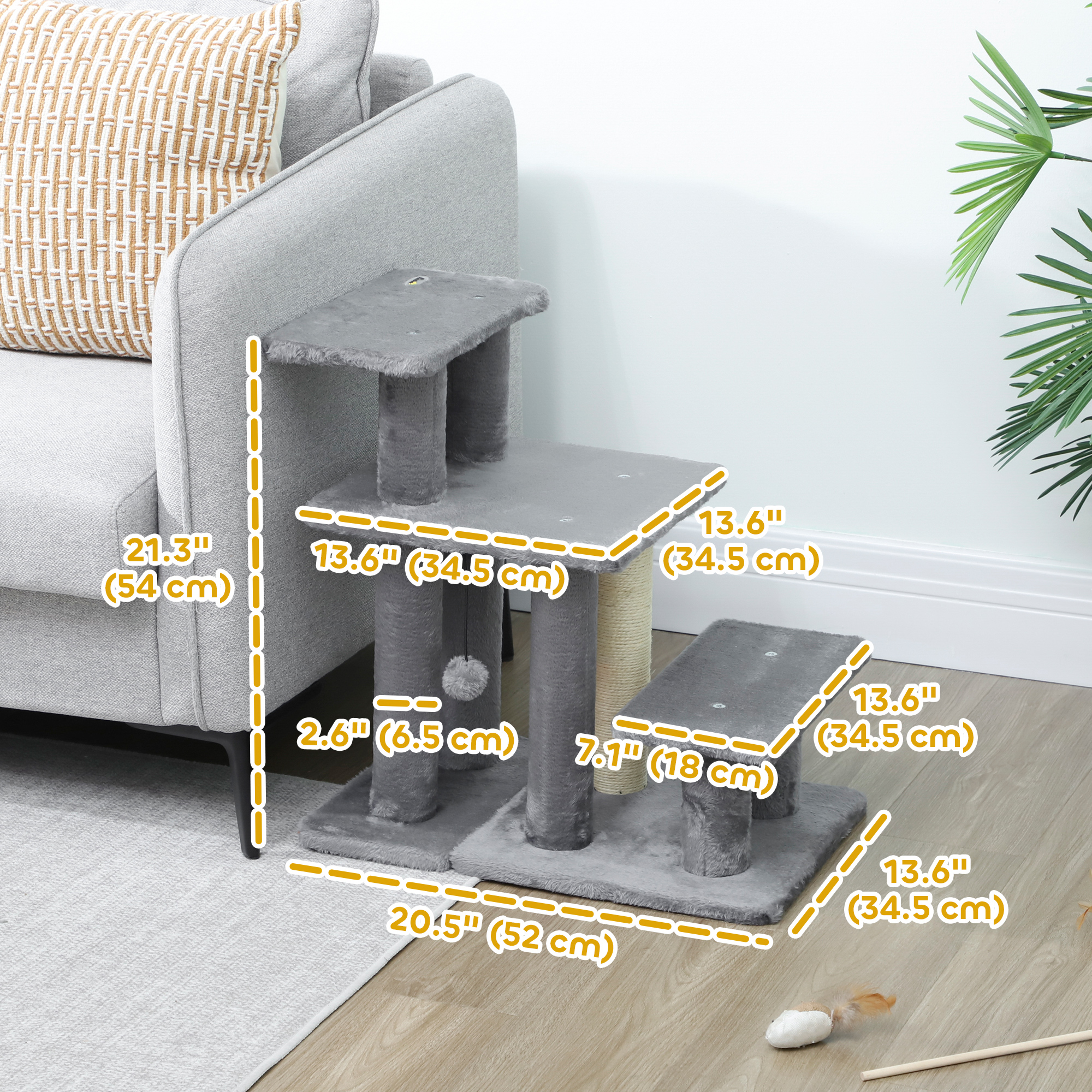
Measure the distance from the floor to the top of the bed, sofa, vehicle seat, or other surface.
The product should reach close to the top of the surface. A large gap may require the dog to jump after reaching the final step or end of the ramp.
When measuring, check:
The total height
The available floor space
The required ramp length
The number of steps
The height of each step
The width of the product
The position beside the furniture
A product that is too short may not provide enough support, while a product that is too tall may be unstable or difficult to position.
Consider the Available Floor Space
Dog stairs usually require less floor space than ramps. They are often easier to use in small bedrooms, apartments, and narrow spaces.
Ramps need more length to create a comfortable slope. A short ramp may fit in a small space, but it can become too steep for dogs with mobility problems.
Before buying, measure:
The length of the available area
The width beside the furniture
The walking path around the product
The clearance needed for doors or drawers
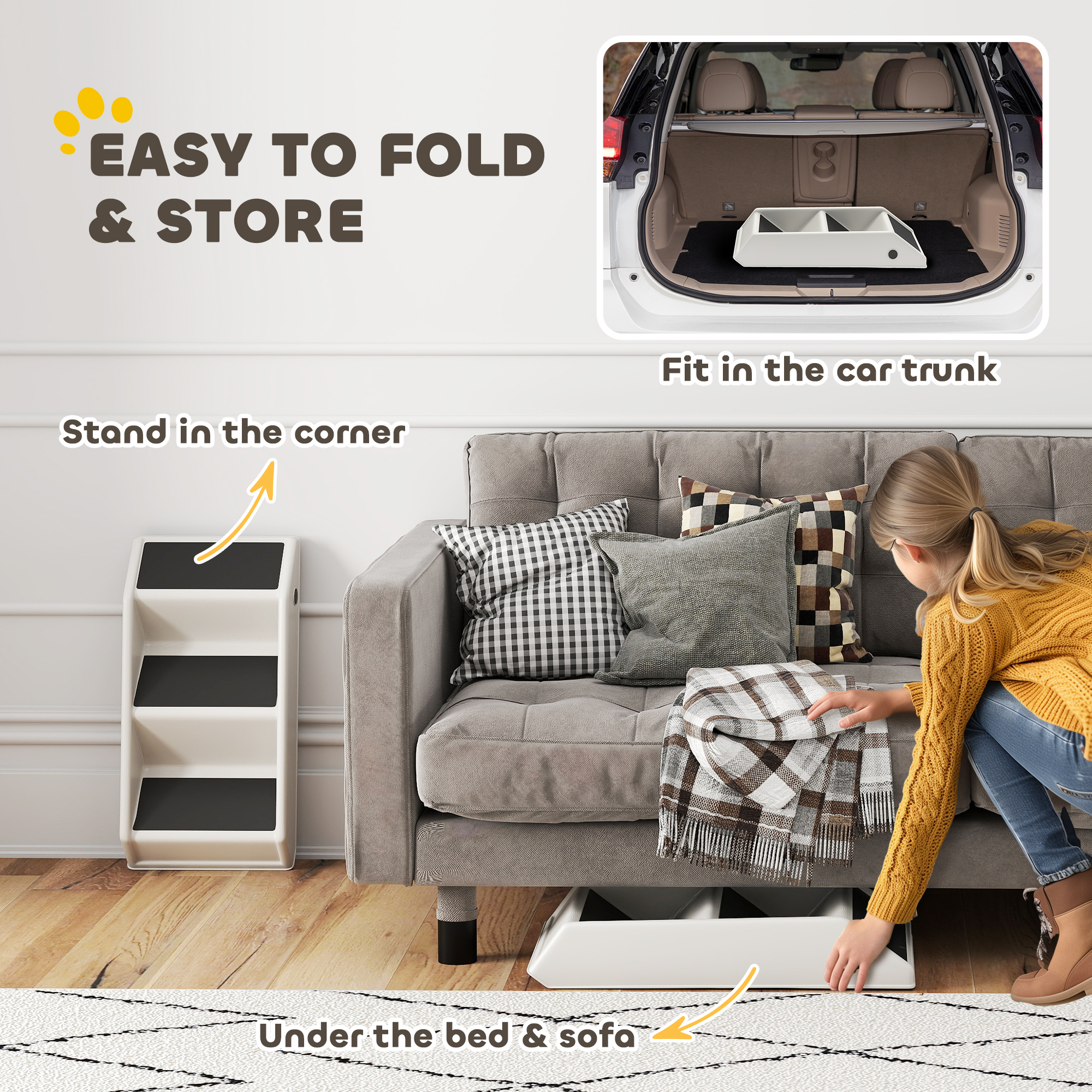
The storage space available when it is not in use
Choose a product that does not block important walkways.
Compare Portability and Storage
Portability is important when you plan to move the product between rooms or carry it in a vehicle.
Dog stairs may be:
Lightweight
Foldable
Stackable
Easy to move
Simple to store beside furniture
Dog ramps may be:
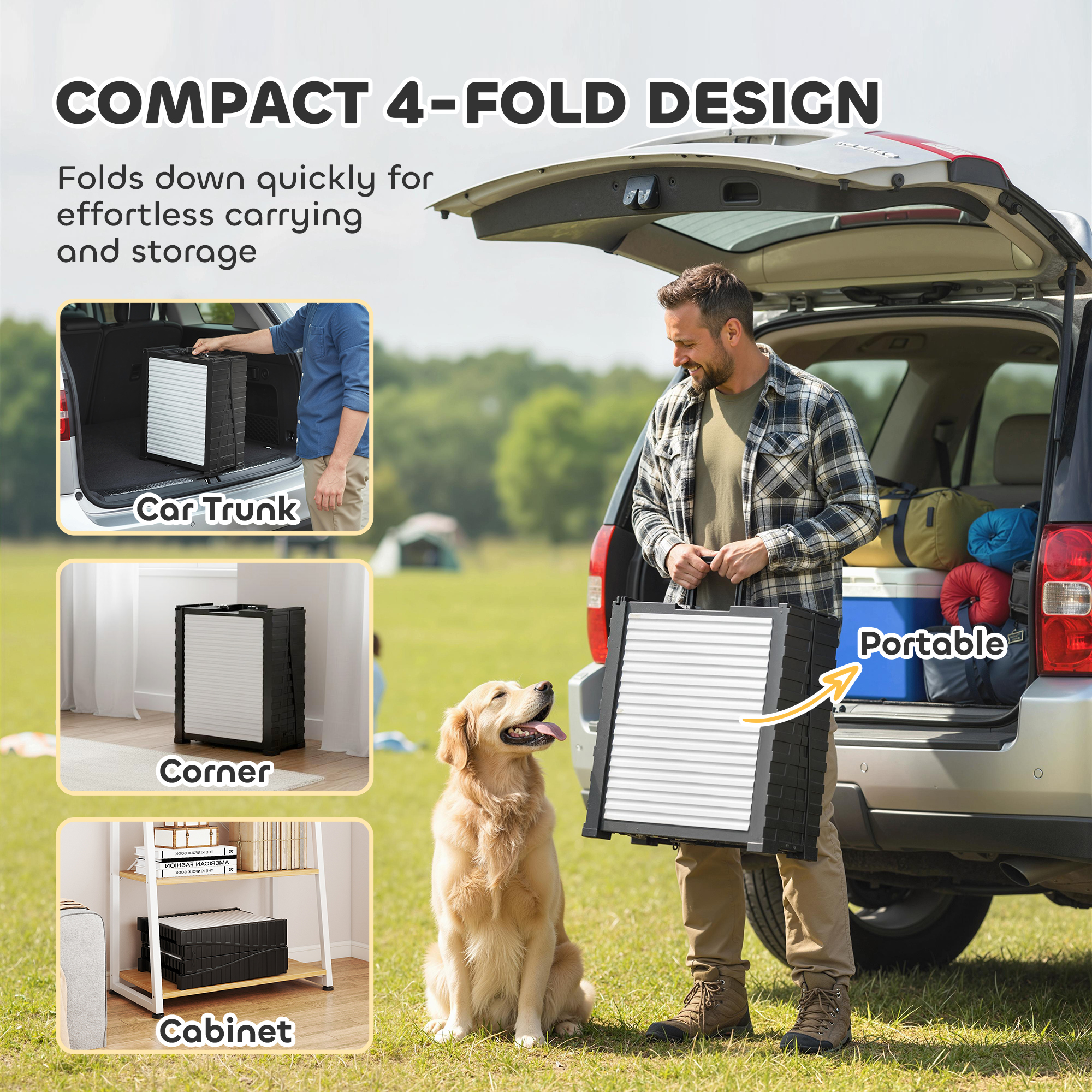
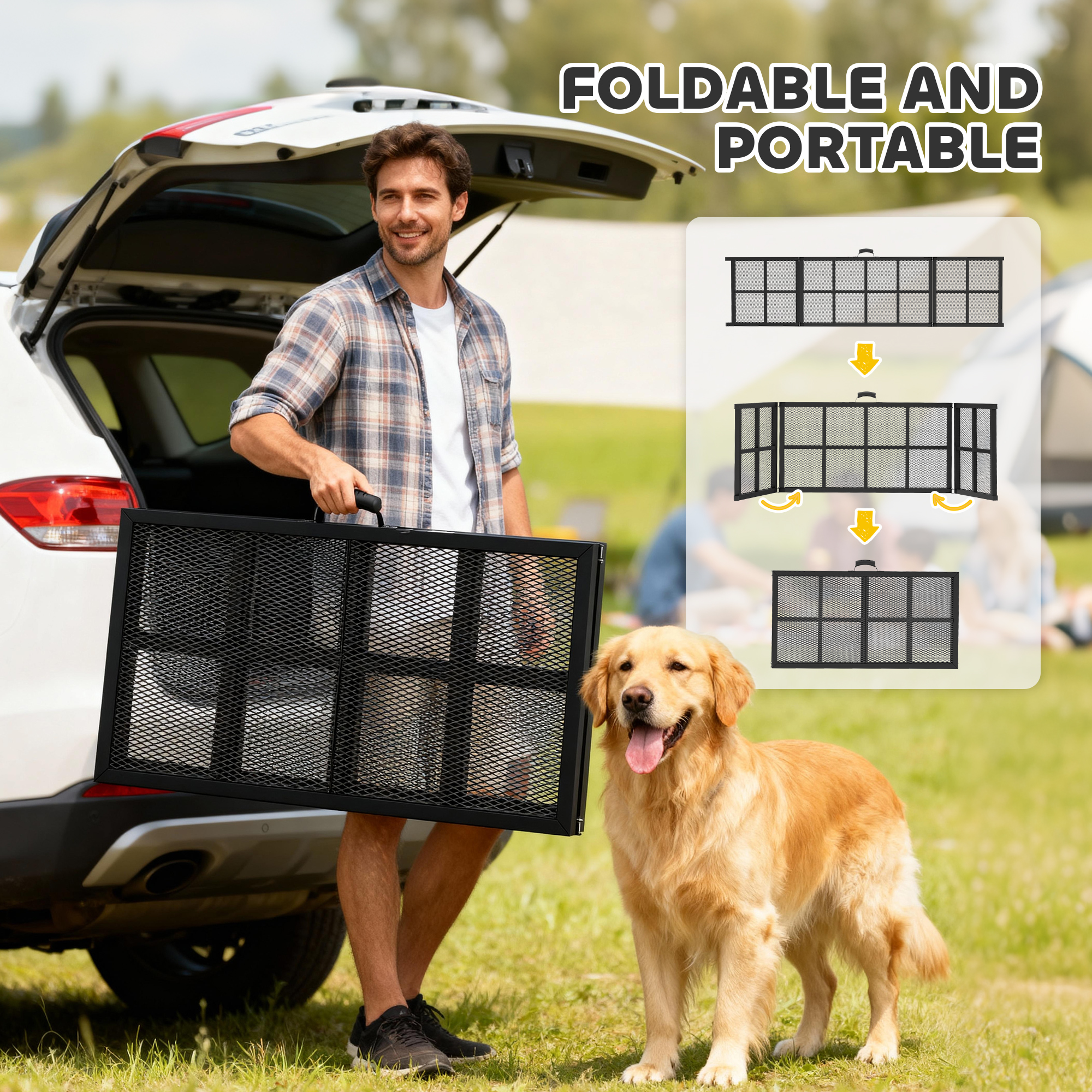
Foldable in half
Telescopic
Fitted with carrying handles
Designed for vehicle storage
Heavier than indoor pet stairs
A vehicle ramp should be easy enough for you to lift, position, clean, and store after use.
Check the Step Height and Depth
For dog stairs, the height and depth of each step affect how easy they are to use.
Low steps are generally better for:
Small dogs
Senior dogs
Dogs with short legs
Dogs with mild mobility limitations
Deep steps provide more room for the dog to place its paws securely.
Avoid narrow or steep steps that force the dog to climb quickly. The dog should be able to place its paws comfortably on each level.
Check the Ramp Incline
The angle of the ramp is one of the most important considerations.
A steep ramp can be difficult for:
Senior dogs
Dogs with weak back legs
Dogs with arthritis
Large or heavy dogs
Dogs with poor balance
Dogs that are nervous about ramps
A longer ramp creates a gentler slope. Adjustable ramps can be useful when the product will be used with surfaces of different heights.
The ramp should remain stable at every height setting.
Choose a Non-Slip Surface
Both stairs and ramps should provide enough grip for the dog’s paws.
Useful surface materials may include:
Carpet
Textured fabric
Rubber
Artificial grass
High-grip plastic
Non-slip tread strips
Smooth surfaces can become difficult to use, especially for dogs with long nails, wet paws, weak legs, or reduced balance.
Check that the product also has a non-slip base so it does not slide across the floor.
Look for Strong and Stable Construction
The stairs or ramp should remain steady when the dog places its full weight on the product.
Check for:
A suitable weight capacity
A strong frame
Secure hinges
Locking mechanisms
A wide base
Non-slip feet
Durable materials
Stable attachment points
Test the product gently before allowing your dog to use it.
If the stairs shake or the ramp moves, the dog may become frightened and refuse to try it again.
Consider Side Rails or Raised Edges
Side rails and raised edges can help guide a dog along the centre of a ramp or staircase.
They may be especially useful for:
Senior dogs
Puppies
Dogs with poor vision
Dogs with balance problems
Dogs that turn around while climbing
Dogs using a high ramp
The edges should not create a tripping hazard or reduce the walking surface too much.
Which Option Is Easier to Train a Dog to Use?
Some dogs understand stairs immediately because the movement feels familiar. Other dogs may be more comfortable with a ramp because it provides a continuous path.
Training success depends on:
The dog’s confidence
Previous experience
The stability of the product
The height and angle
The surface texture
The use of treats and praise
The dog’s physical comfort
Do not force or pull the dog onto the product. This can create fear and make future training more difficult.
How to Train Your Dog to Use Stairs
Begin with the stairs placed on a flat surface or beside a low piece of furniture.
A simple training process can be:
Allow the dog to smell and inspect the stairs
Place treats on the lower step
Reward the dog for placing one paw on the stairs
Encourage the dog to climb one step at a time
Practise going upward and downward
Keep sessions short and positive
Support the dog if it appears unsteady
Use a lead or harness for additional control when necessary, but do not drag the dog.
How to Train Your Dog to Use a Ramp
Begin with the ramp lying flat on the floor. This allows the dog to become comfortable with its surface before walking on an incline.
You can:
Place treats along the ramp
Walk beside the dog
Reward calm movement
Practise in both directions
Raise the ramp gradually
Use a harness for support
Keep the incline low during early training
Once the dog is comfortable, position the ramp securely beside the furniture or vehicle.
Dog Stairs for Beds and Sofas
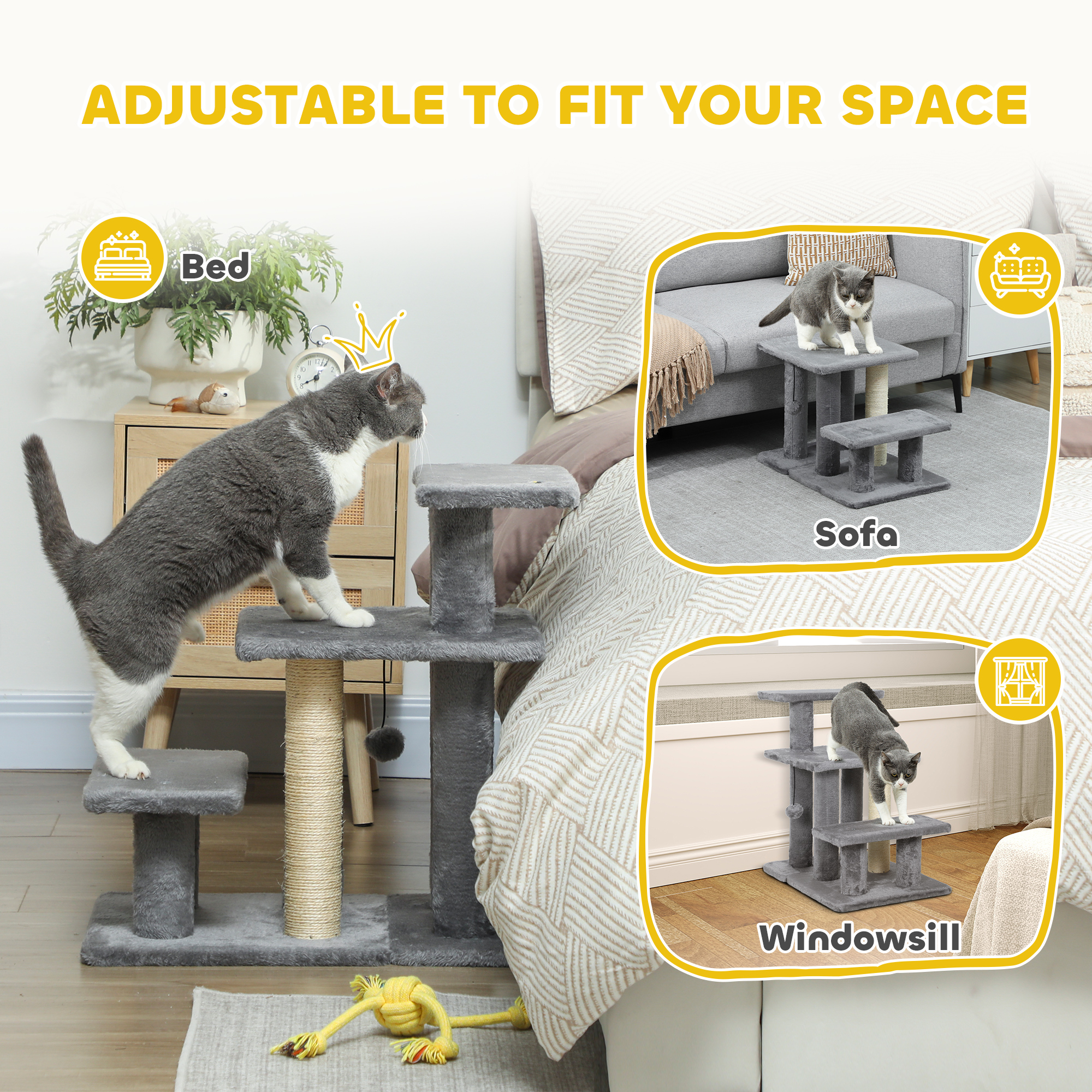
Dog stairs are often a practical choice for beds and sofas because they are compact and easy to keep in one position.
They may work well when:
The furniture is moderately high
The dog can climb normal stairs
The room has limited space
The stairs can remain in one place
The dog is small or medium-sized
A ramp may be better for a very high bed, but only if there is enough space to maintain a gentle angle.
Dog Ramps for Vehicles
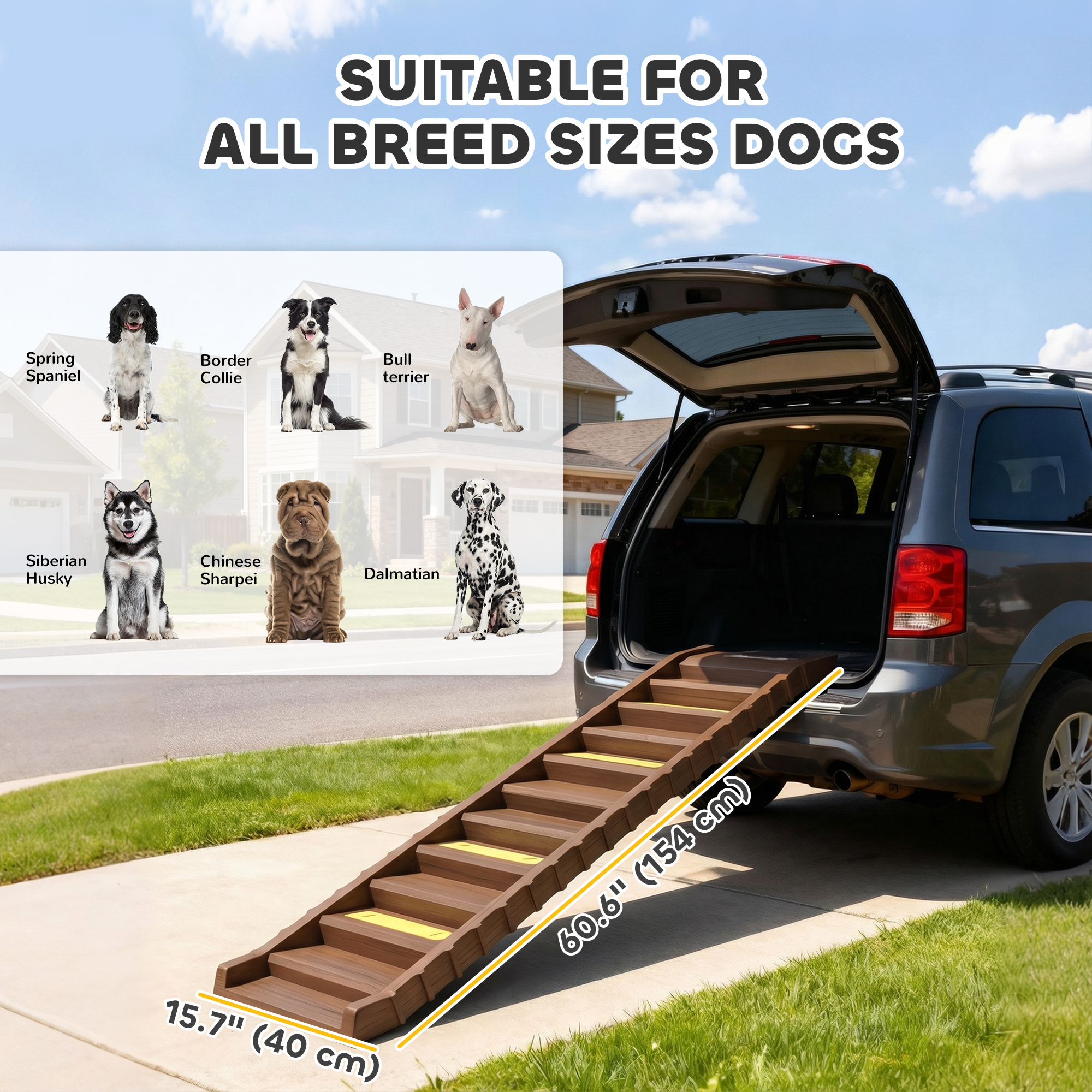
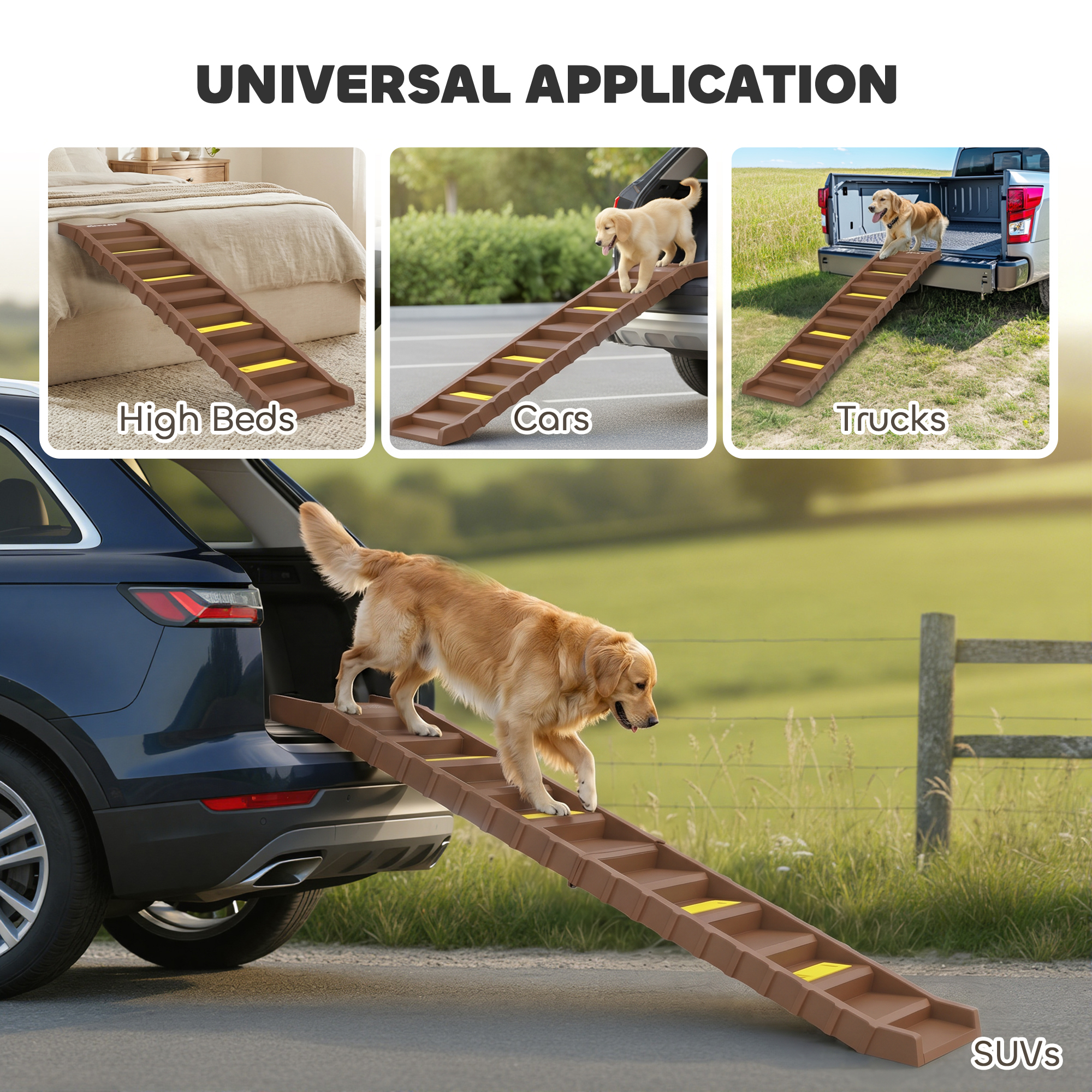
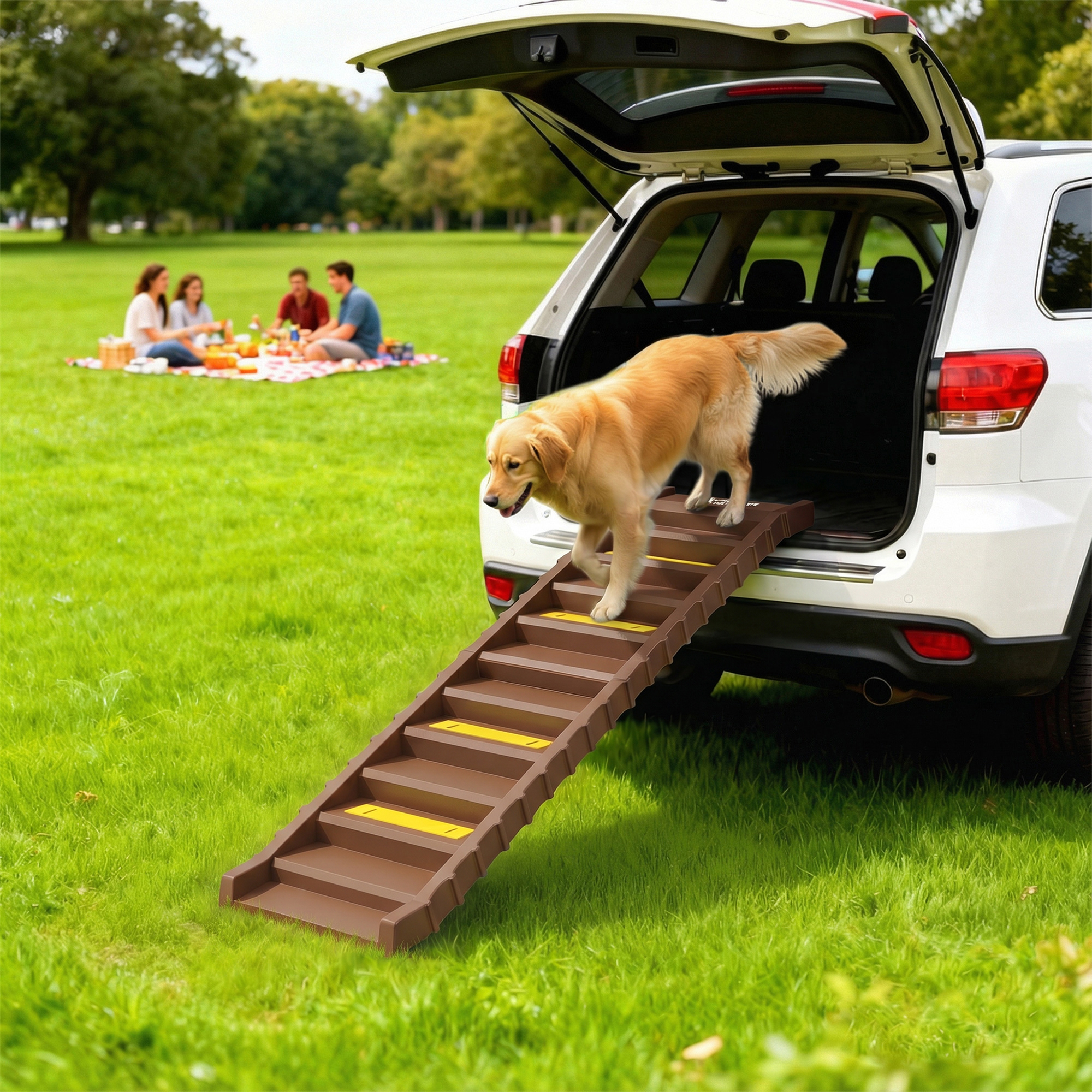
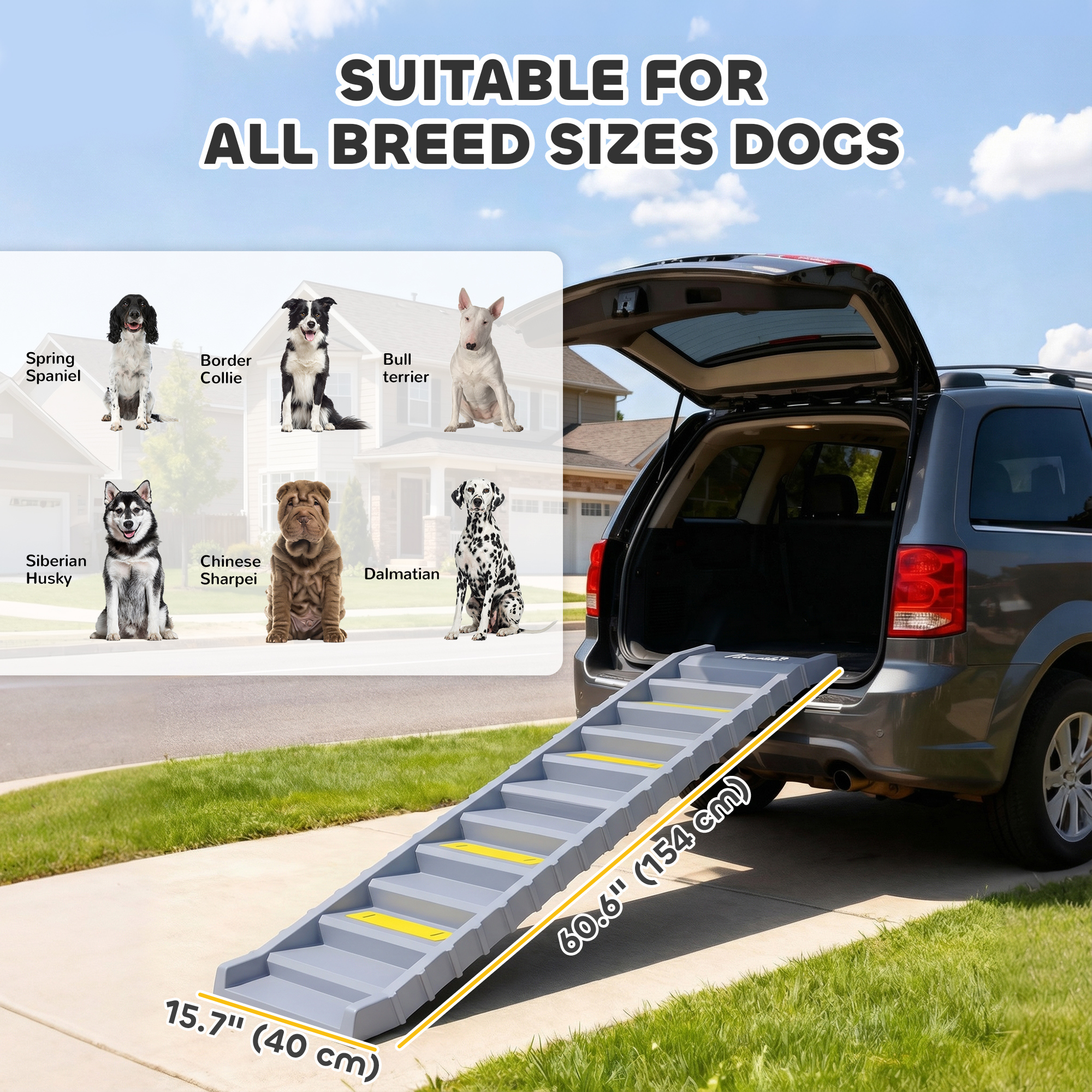
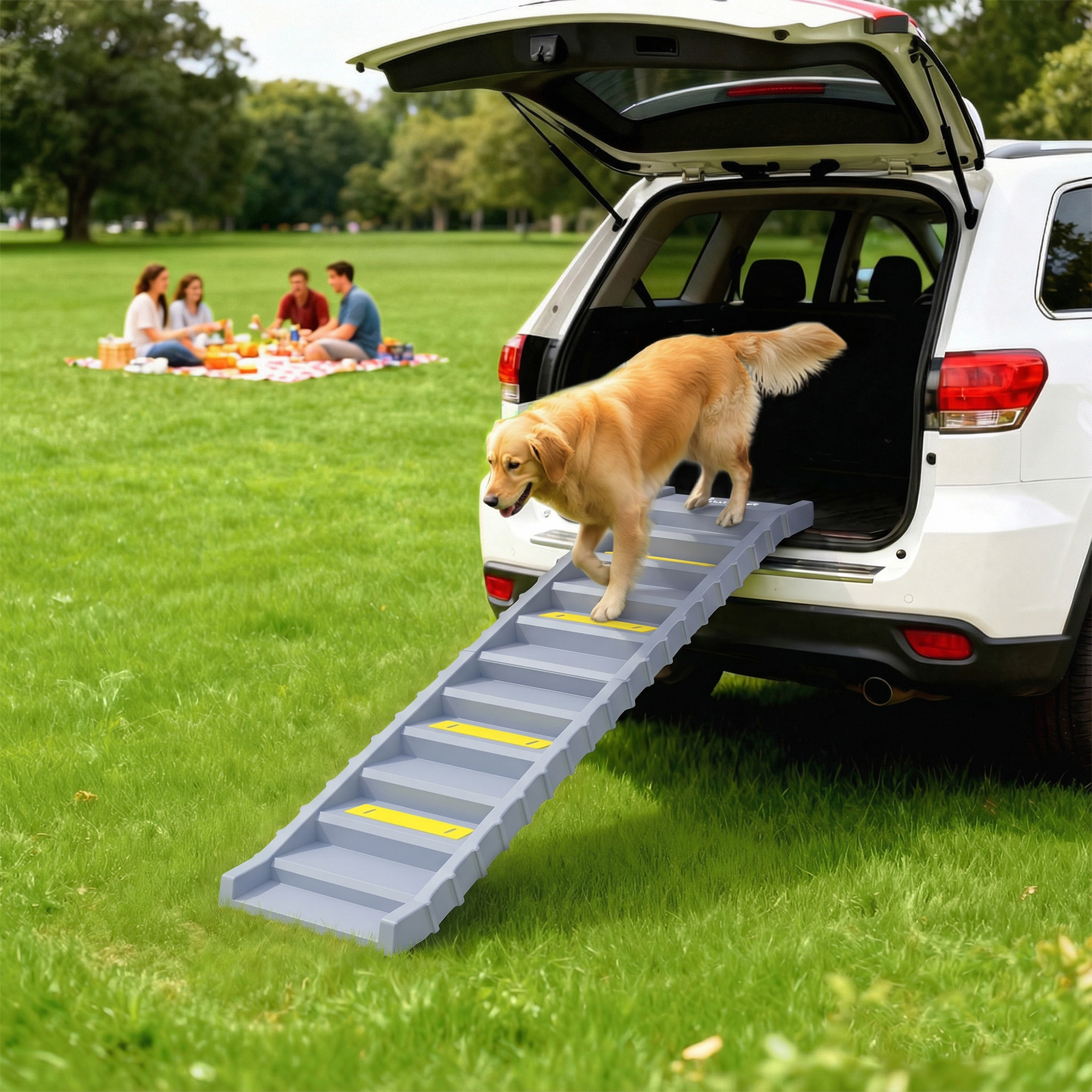
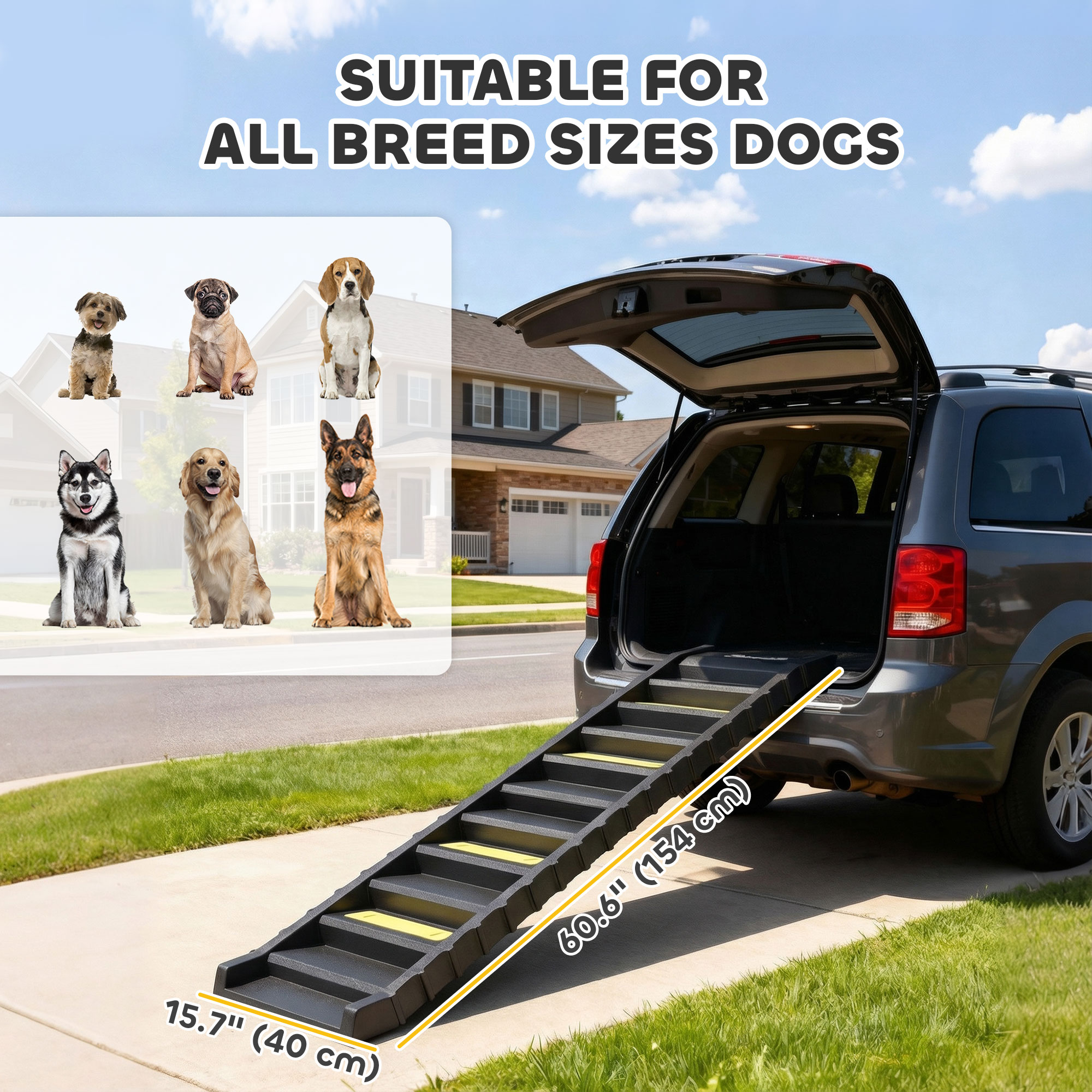
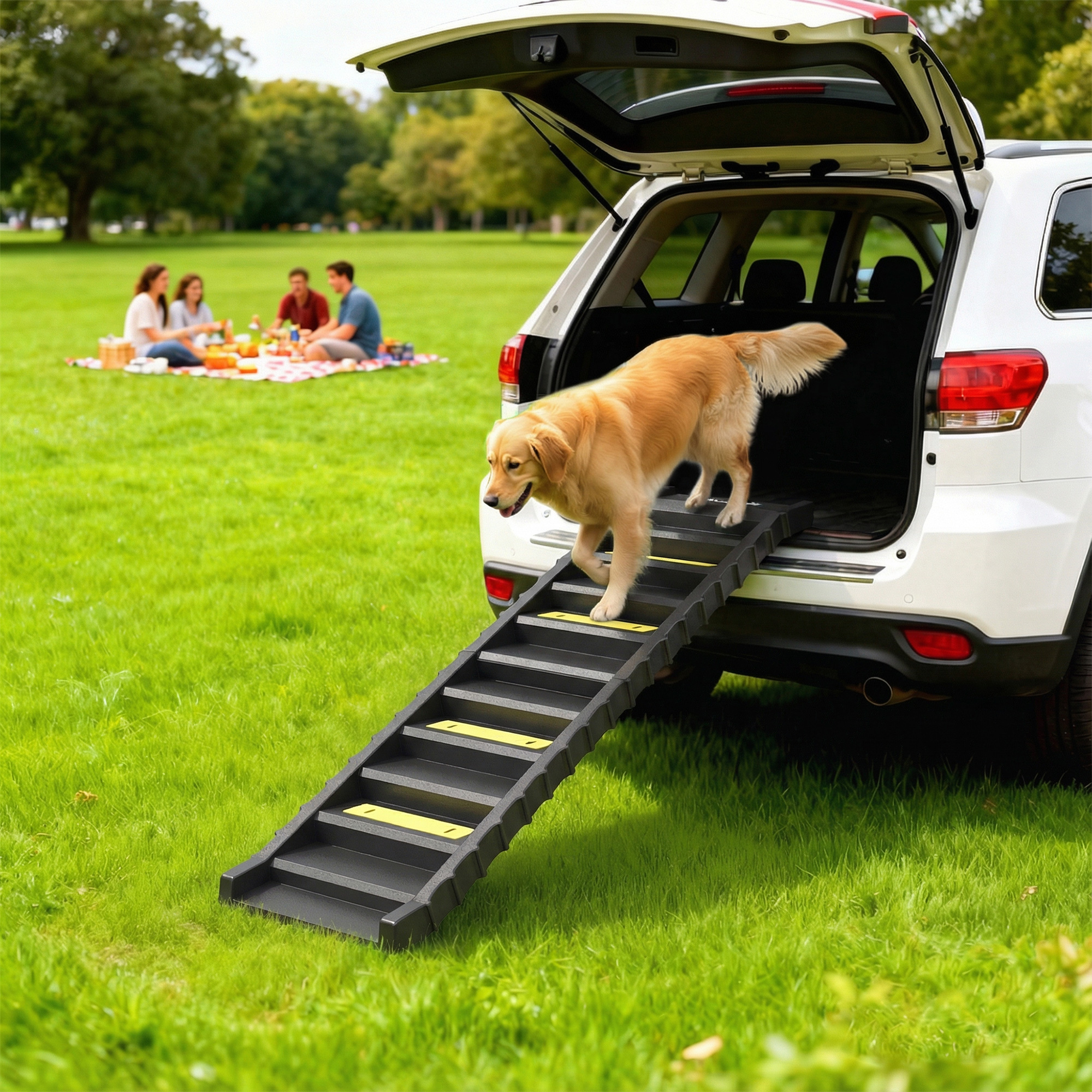
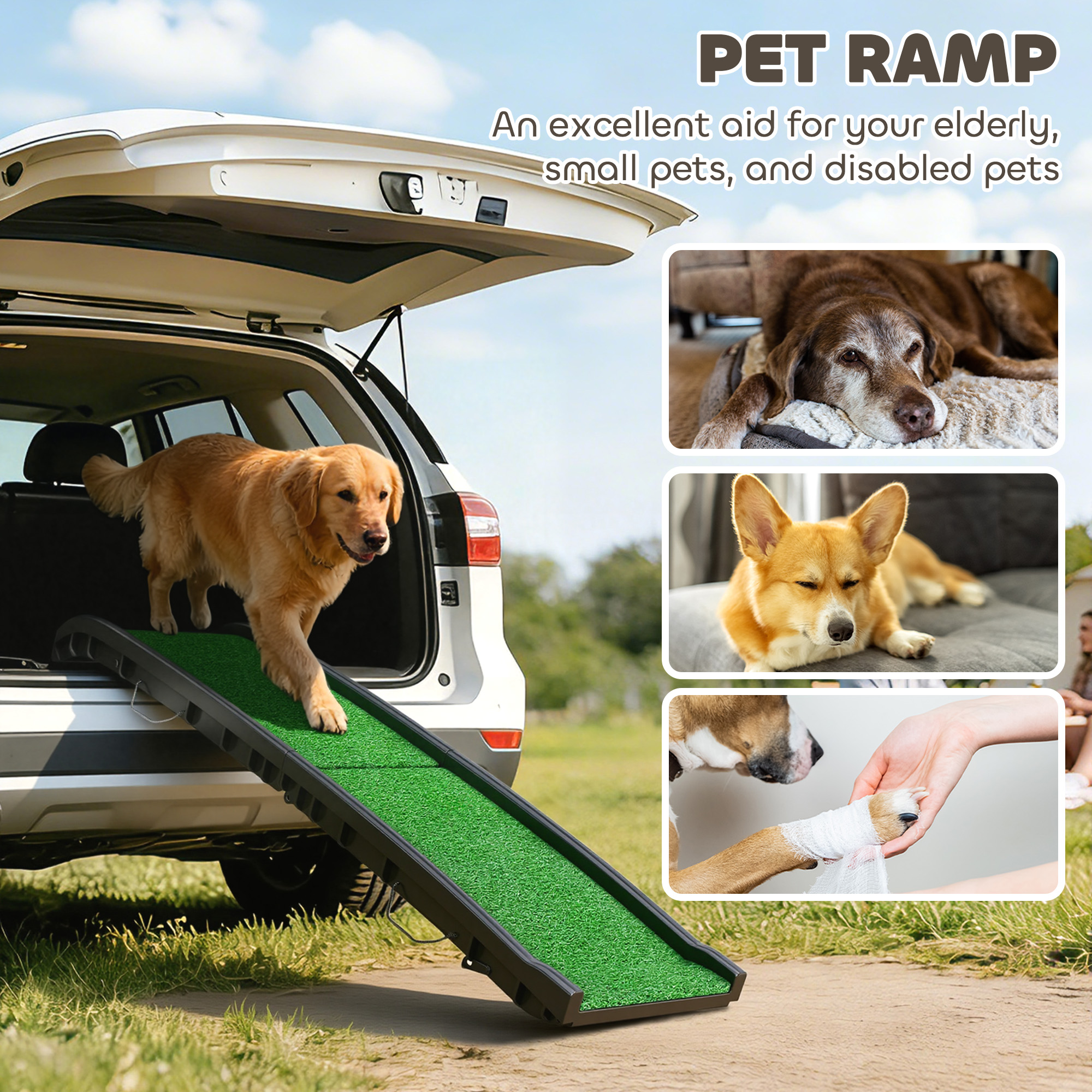
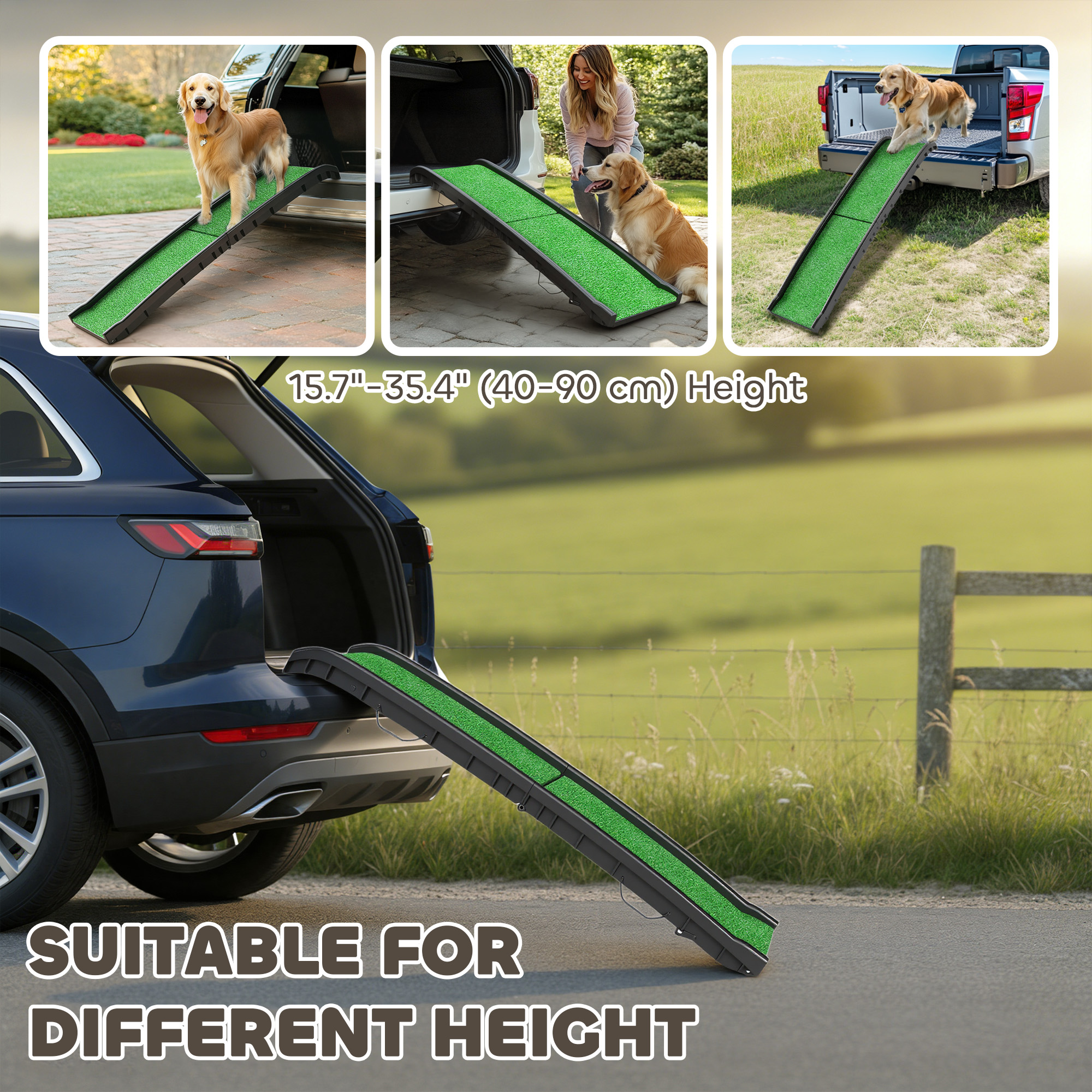
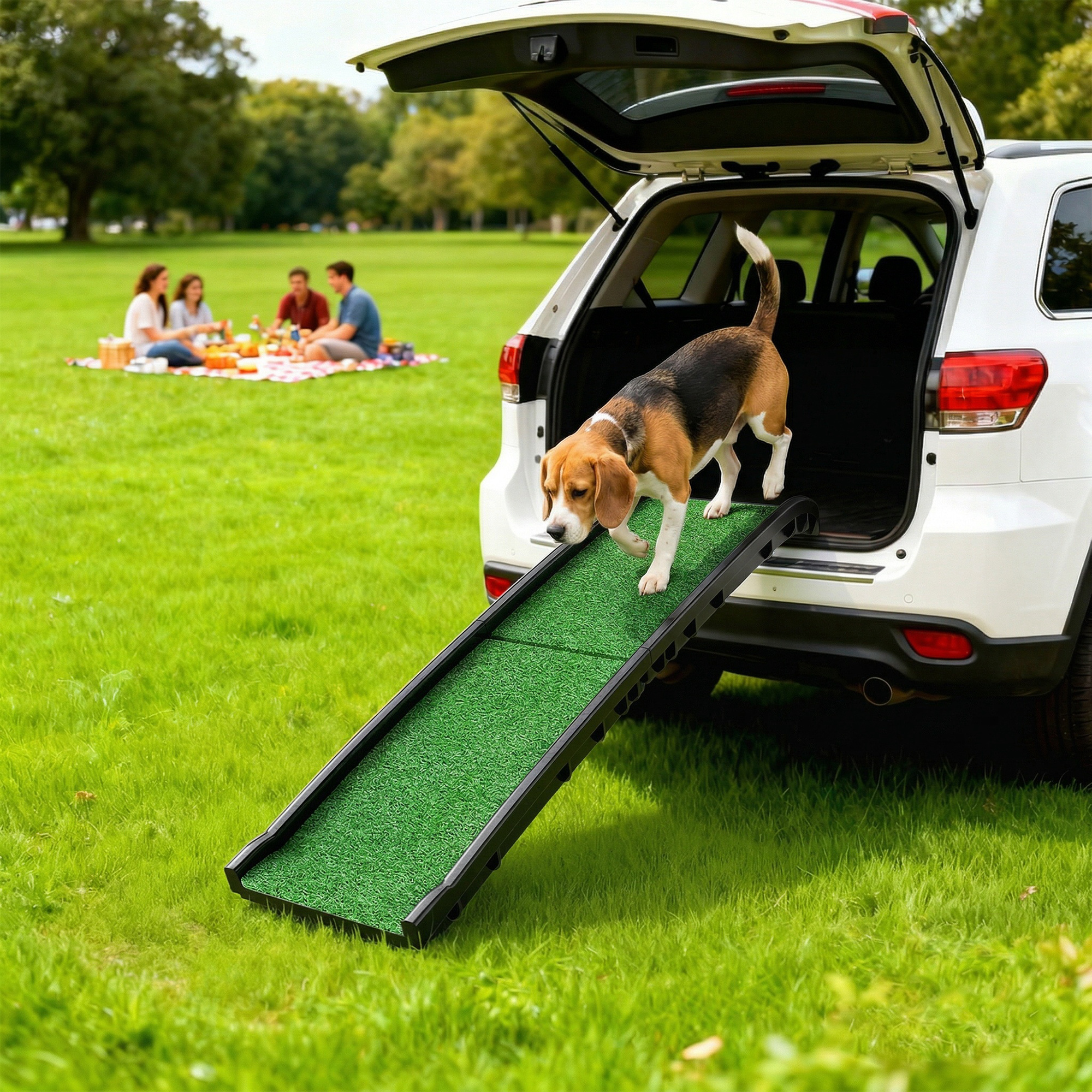
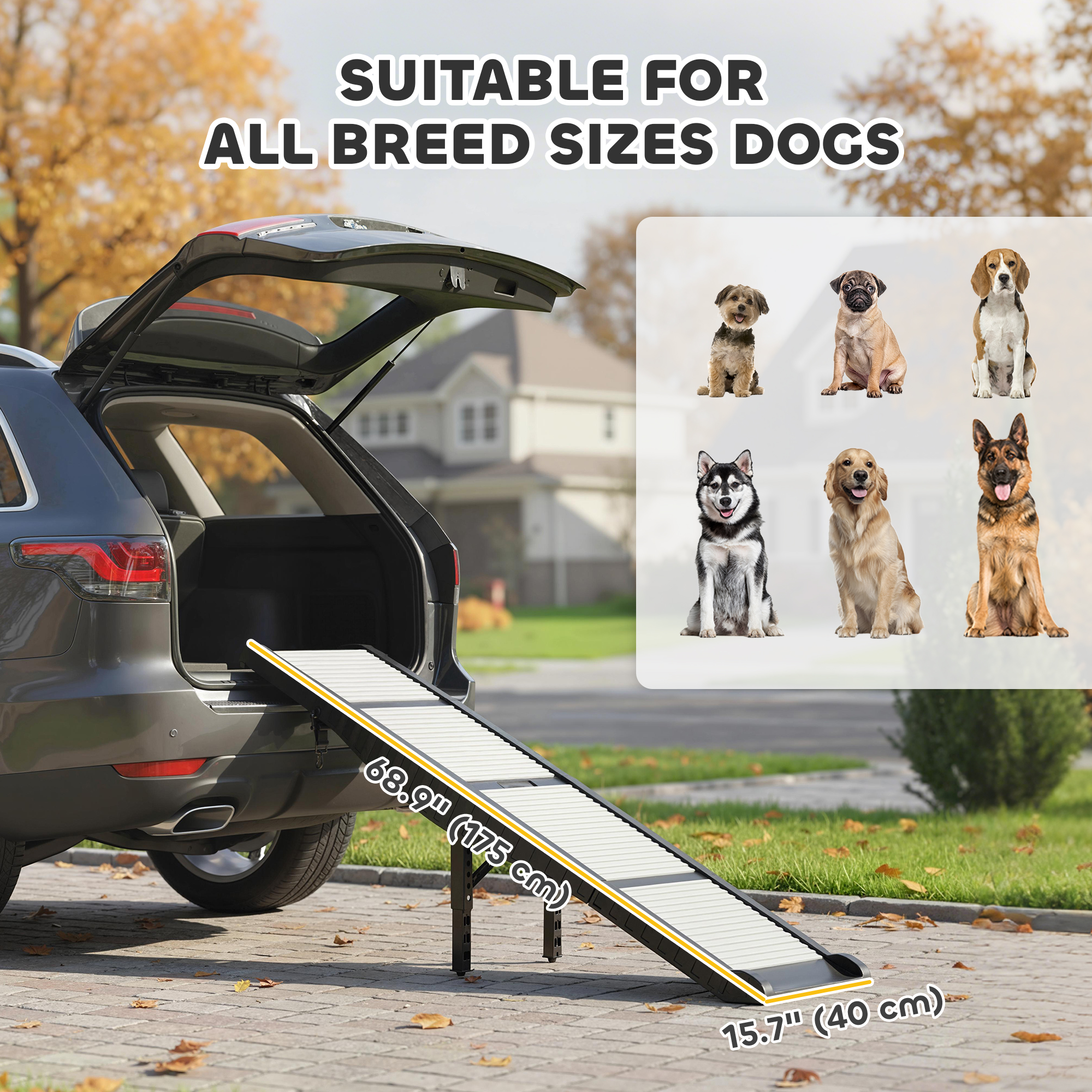
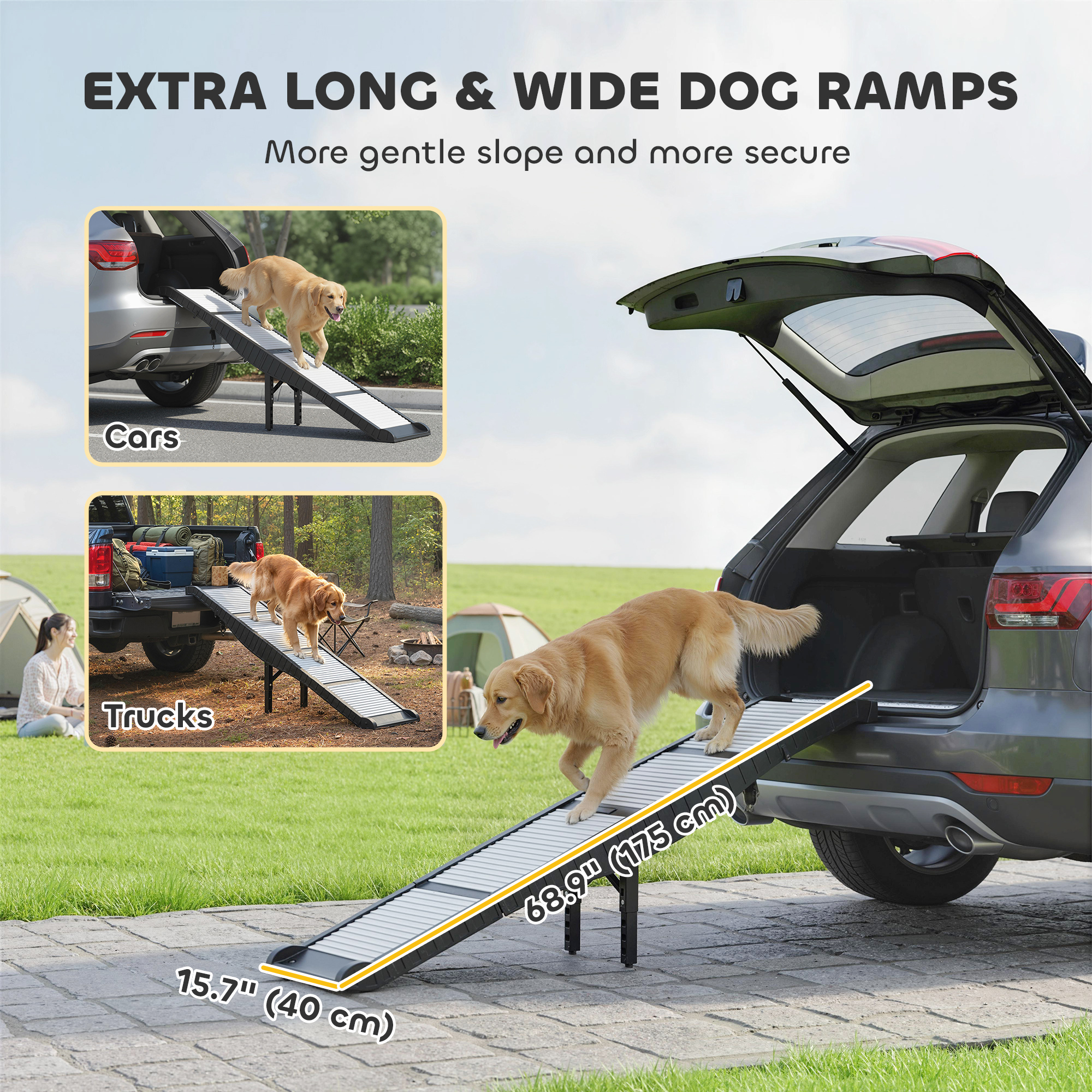
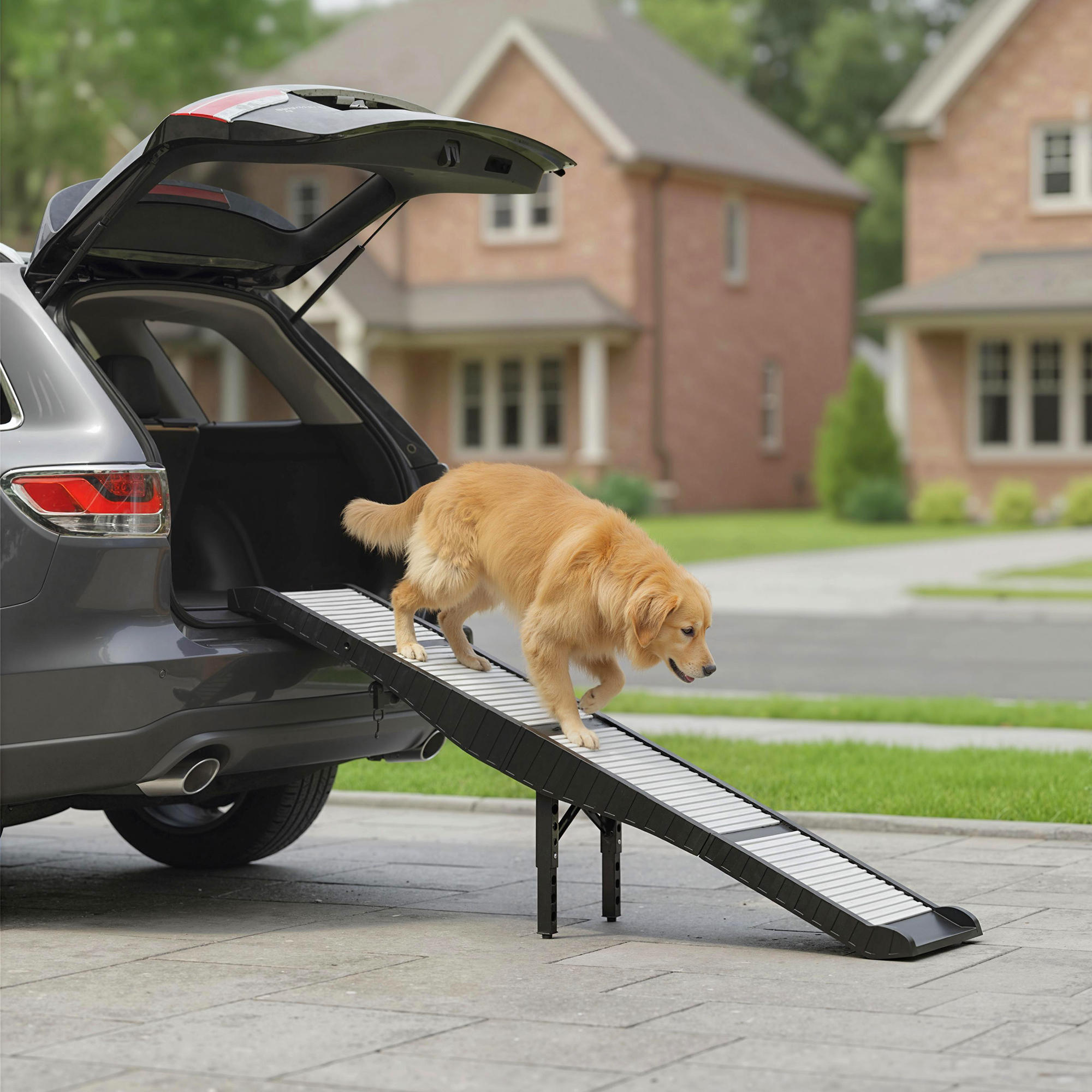
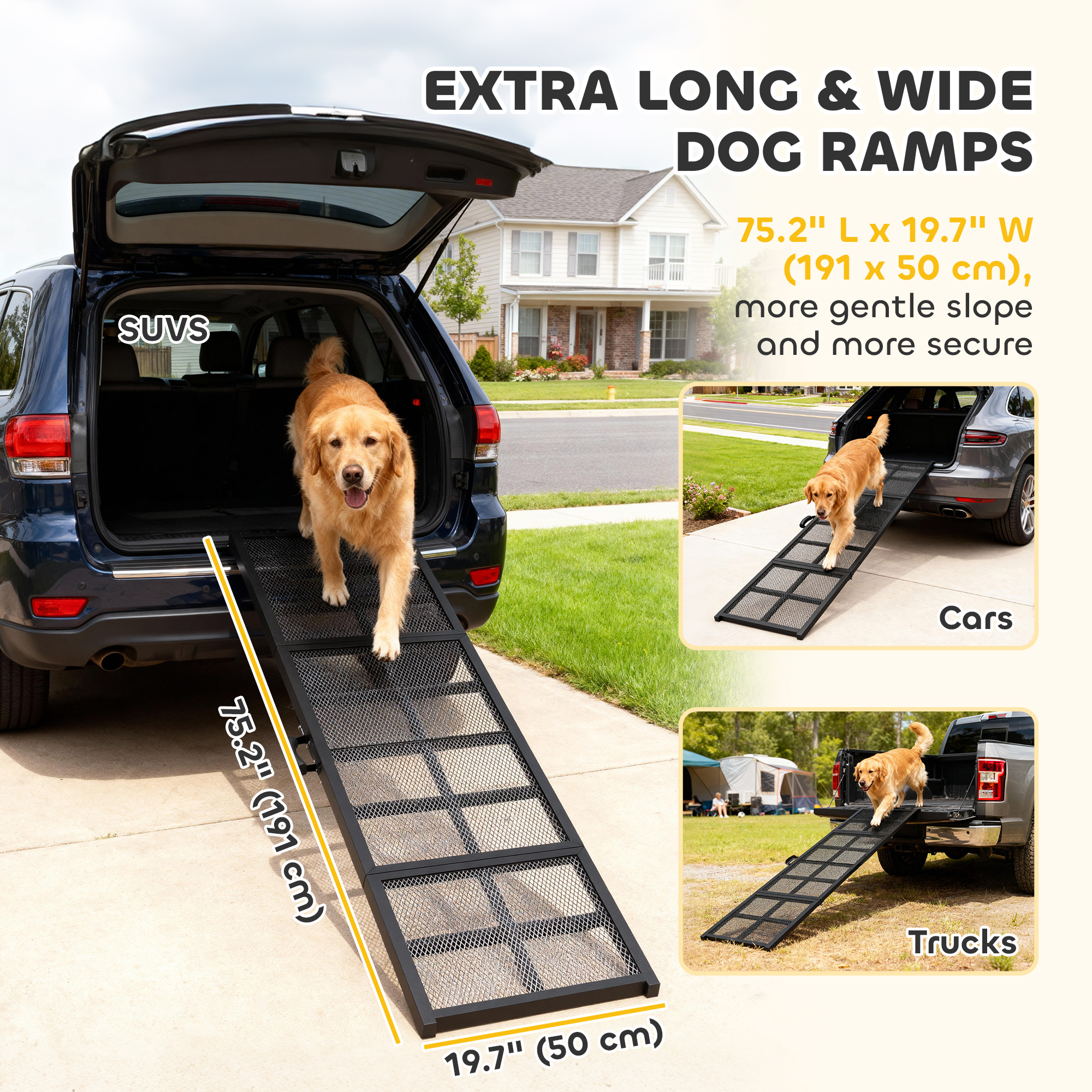
Ramps are usually more practical than stairs for helping dogs enter cars, SUVs, vans, and trucks.
A vehicle ramp can help:
Large dogs that are difficult to lift
Senior dogs with limited mobility
Dogs recovering from surgery
Dogs with joint or back problems
Owners who want to reduce repeated lifting
Choose a ramp designed for vehicle use. It should have a suitable weight capacity, secure contact points, and a high-grip surface.
Always stabilise the ramp before use.
Cleaning and Maintenance
Dog stairs and ramps should be cleaned regularly to remove hair, dirt, mud, moisture, and odours.
Maintenance may include:
Vacuuming fabric surfaces
Washing removable covers
Wiping plastic or metal frames
Cleaning non-slip tread
Checking screws and hinges
Inspecting the base for damage
Allowing wet surfaces to dry fully
A dirty or worn surface may become slippery.
Follow the manufacturer’s care instructions to avoid damaging the product.
Advantages of Dog Stairs
Dog stairs can offer several benefits:
They require less floor space
They are easy to place beside furniture
They are available in lightweight designs
Many dogs already understand how to climb steps
They can be easier to store
They are suitable for small rooms
They are available in different heights
Dog stairs are often a good choice for healthy dogs that can climb comfortably.
Disadvantages of Dog Stairs
Dog stairs may not be suitable for every pet.
Possible disadvantages include:
They require more leg lifting
Steep steps may be difficult for small dogs
They may be uncomfortable for arthritic joints
Narrow steps can affect balance
Lightweight models may move
Some models cannot support large dogs
Dogs may jump from the upper steps
Choose low, wide, stable steps whenever possible.
Advantages of Dog Ramps
Dog ramps may provide:
A smoother walking path
Less need to lift the legs
Better support for senior dogs
Easier access to vehicles
Options for large and heavy dogs
A gentler solution for some joint conditions
Adjustable and foldable designs
A ramp is often a strong option for dogs with reduced mobility.
Disadvantages of Dog Ramps
Dog ramps also have some limitations:
They require more floor space
Short ramps may be too steep
Some dogs are afraid of the slope
Smooth surfaces may be slippery
Large ramps can be heavy
They may be more difficult to store
The dog may walk off the side without raised edges
Training and correct positioning are important for safe use.
Common Buying Mistakes to Avoid
Avoid choosing a product based only on appearance or price.
Common mistakes include:
Not checking the weight capacity
Buying steps that are too high
Choosing a ramp that is too short
Ignoring the available floor space
Selecting a slippery surface
Buying stairs that do not reach the furniture
Using an unstable product
Not training the dog gradually
Allowing the dog to jump from the side
Ignoring the dog’s health and mobility needs
Measure carefully and consider how your dog currently moves.
When Should You Ask a Veterinarian?
Veterinary guidance is important when your dog:
Suddenly refuses to climb or jump
Shows signs of pain
Limp after using stairs
Has arthritis
Has a back or spinal condition
Is recovering from surgery
Has weak back legs
Frequently slips or falls
Has difficulty standing
Has recently experienced an injury
Mobility problems may be caused by an underlying health condition. Stairs or ramps can support movement, but they do not replace medical diagnosis or treatment.
Final Thoughts
Dog stairs and dog ramps can both make it easier for pets to reach beds, sofas, vehicles, and other raised surfaces. Dog stairs are usually more compact and may suit healthy dogs that are comfortable climbing. Dog ramps provide a continuous slope and may be better for senior dogs, large dogs, and pets with joint, back, or mobility concerns.
Consider your dog’s size, age, leg length, balance, health, confidence, and usual movement before choosing. You should also measure the furniture height, available floor space, step dimensions, ramp angle, and product weight capacity.
Whichever option you select, choose a stable product with a non-slip surface and introduce it gradually. The best mobility product is one your dog can use safely, comfortably, and confidently every day.


































 No products in the cart.